


This is part two of an ongoing series where I keep track of the ideas I’m seeing take shape at the top — on runways, on sites like Net-a-Porter and Moda Operandi, and across interior design magazines — and then reverse-engineer by shopping at the thrift store. The goal isn’t to find the exact thing, but to recognize the visual language early enough to thrift a version that does the same job.
Like the first list, many of these “trends” are simply shifts in proportion, texture, and styling that can be interpreted through secondhand pieces… you just have to know what to look for.
Here are six things that I think we’ll see a lot of in the near future — and if you’re thrifting with even a little bit of strategy, they’re worth having on your radar now.
Lace collars


from left: a Sea New York puffer jacket and a Sea New York capelet jacket
Designers are layering lace collars onto otherwise simple silhouettes right now — the kind you’re seeing all over collections from Sea New York. The thrifted version is easier than people think: antique malls are full of detachable lace collars, chemisette inserts, and blouse toppers that can be worn over knits, button-downs, even sweatshirts. The key is scale and restraint — let the collar do the work, and keep everything else plain.
Here’s an incredible option for $45:
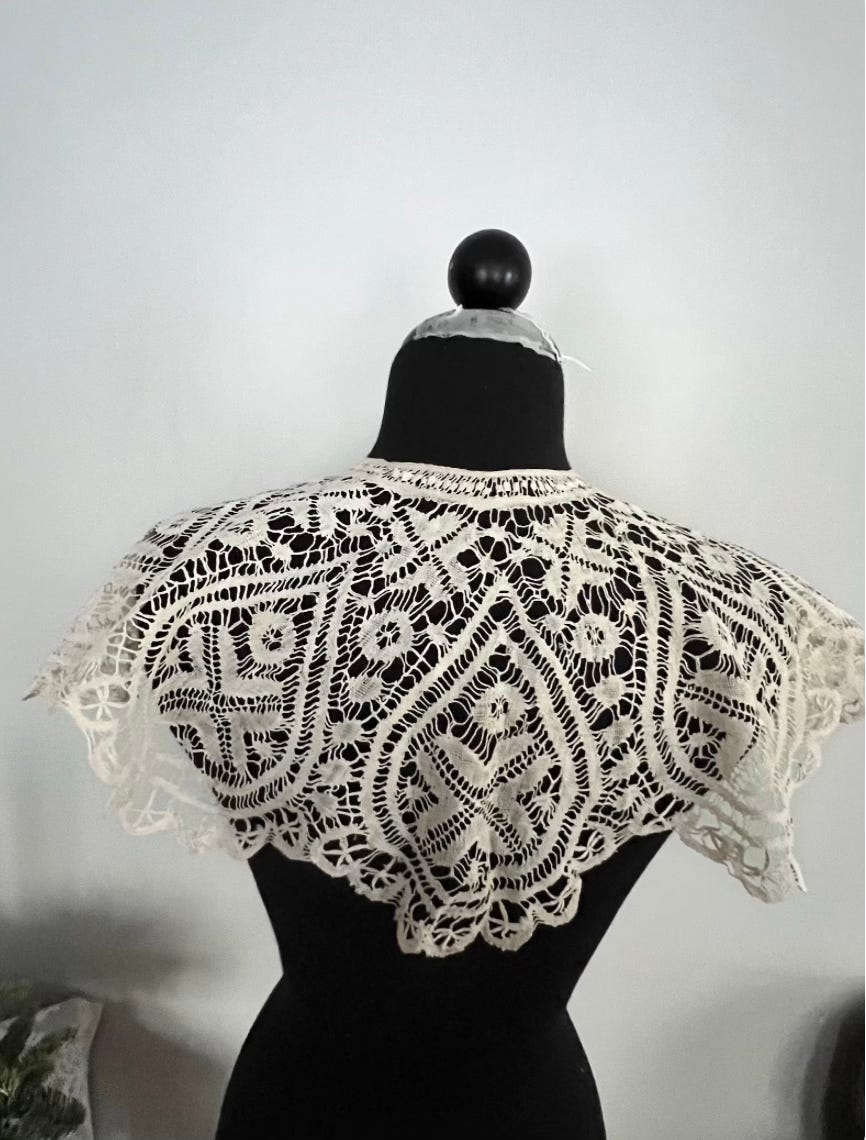
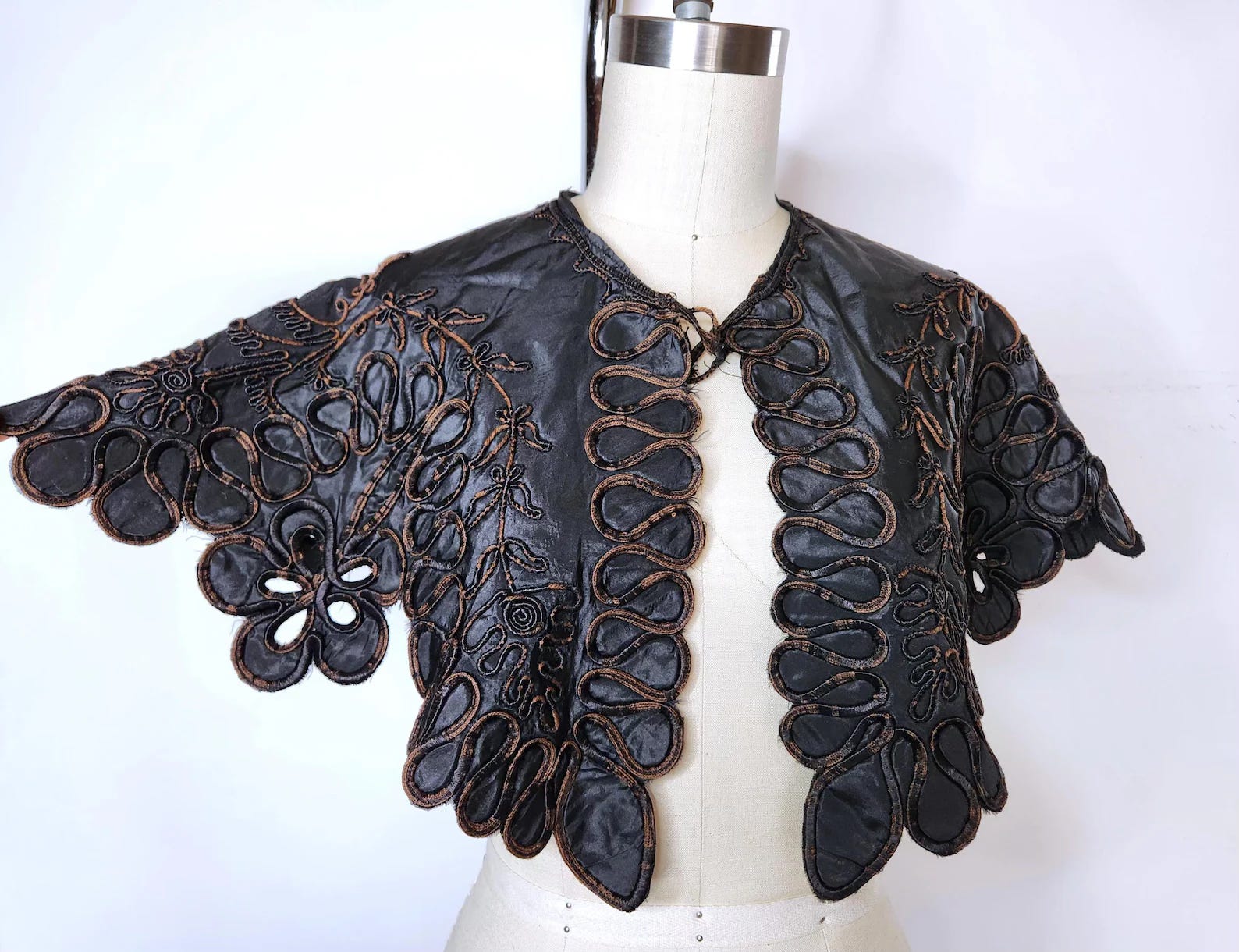
How to style it
Layer over a crisp button-down, a crew neck sweater, a beat-up concert tee or sweatshirt, or a leather jacket
Let the collar sit slightly oversized rather than perfectly delicate
Keep the rest of the outfit minimal (denim, trousers, flats) so it doesn’t skew costume (or Ruth Bader Ginsburg, which a lace collar has a tendency to do!)
Search terms: detachable lace collar, Victorian lace collar, antique lace chemisette, Edwardian blouse insert, crochet collar (filter for cotton or linen)
Folk art cabinets
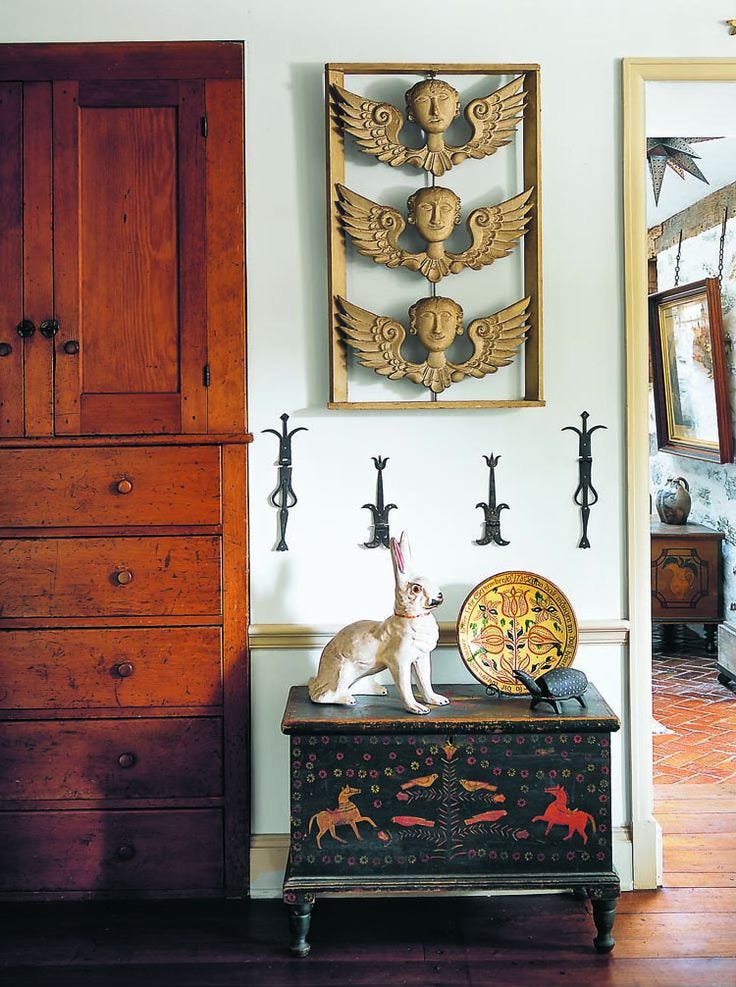
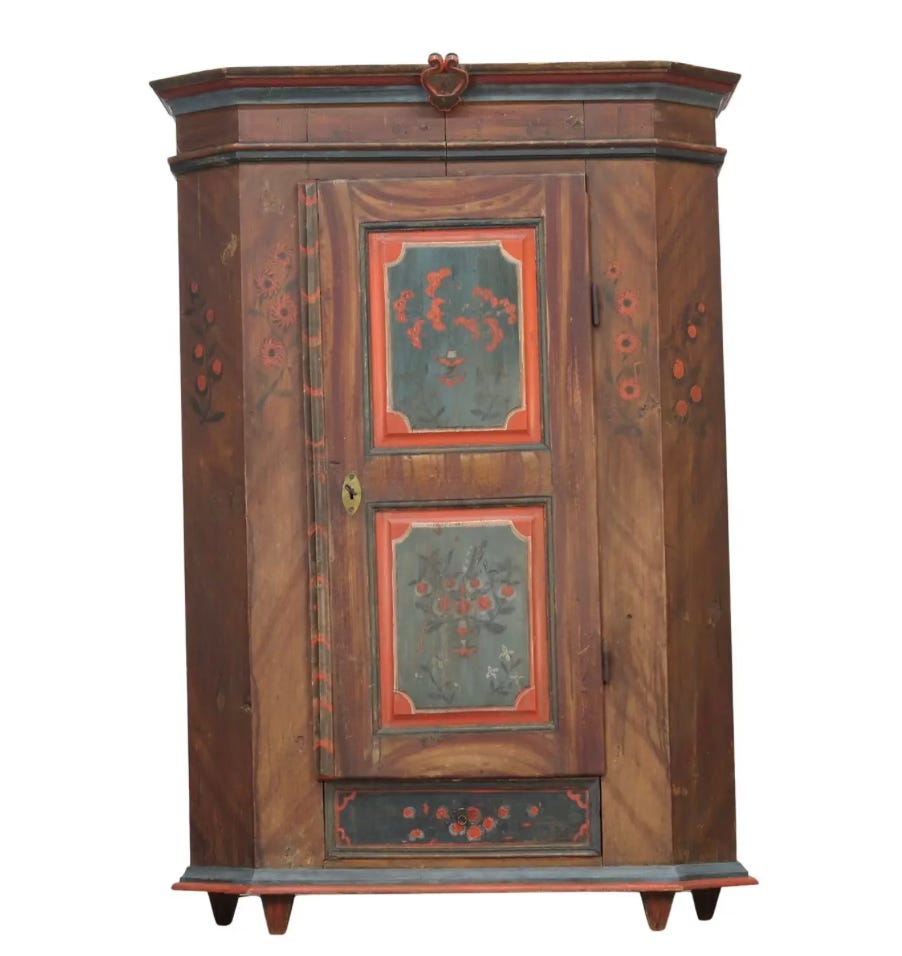
Hand-painted folk art cabinets are showing up again in interiors — not as “country” pieces, but as the punctuation mark on the end of the otherwise austere sentence. The appeal lies in the imperfections: naive florals, uneven brushwork, slightly off proportions. Look for small cabinets, cupboards, or wall-mounted pieces with original paint and visible wear. Used sparingly, they read collected and intentional, not themed — especially in otherwise restrained rooms.
A note that these can be wildly expensive so if you see one at a thrift store or estate sale, it’s probably a great buy! Look at this one I saw at an estate sale on 50% off day that I (stupidly) did not buy:


Or this newer one (i.e. made in the ‘90s, so not an antique but still amazing) via a Goodwill near St. Pete, FL over three years ago:
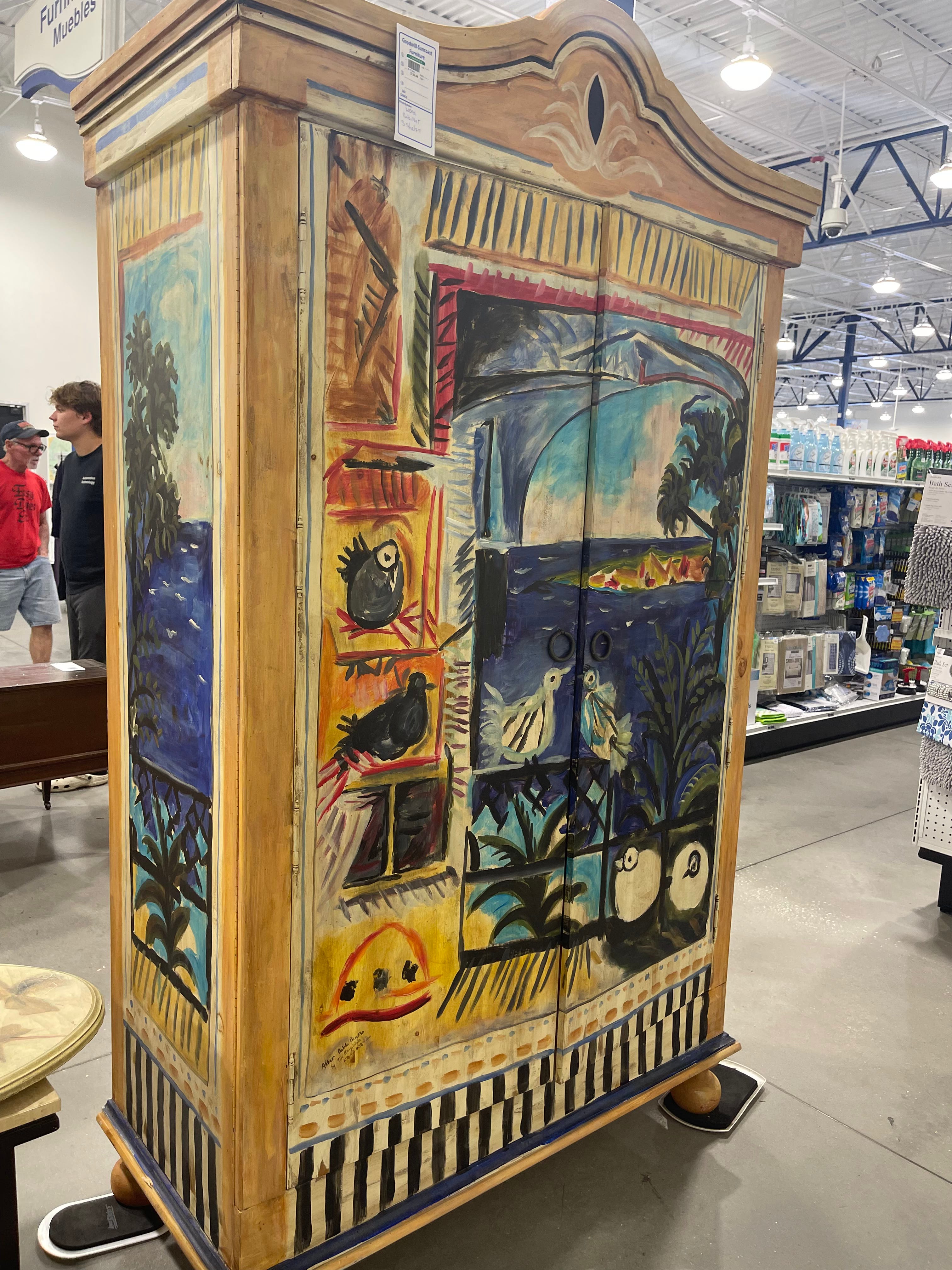
And here’s a rustic farmhouse painted cabinet via 1stDibs:
How to style it
Use as a single accent piece rather than part of a matching set
Works best in rooms that are otherwise neutral or modern
Search terms: folk art cabinet, hand-painted cupboard, painted primitive cabinet decorative painted storage, painted bridal cabinet
Silk Pajama Robes



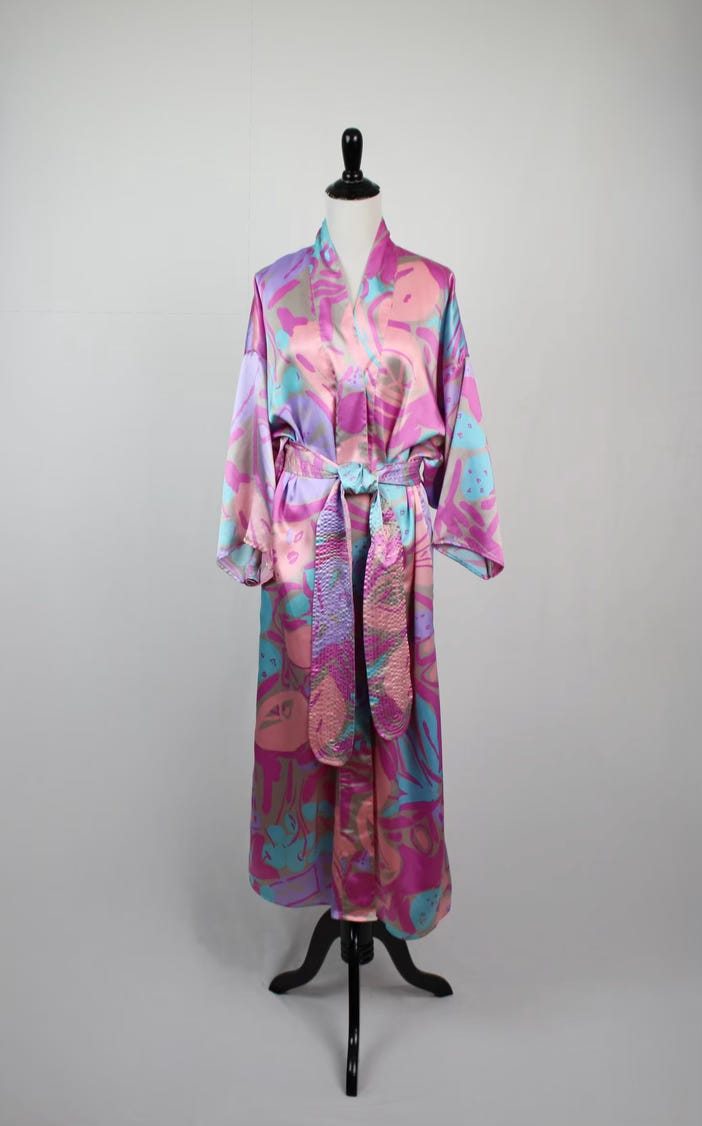
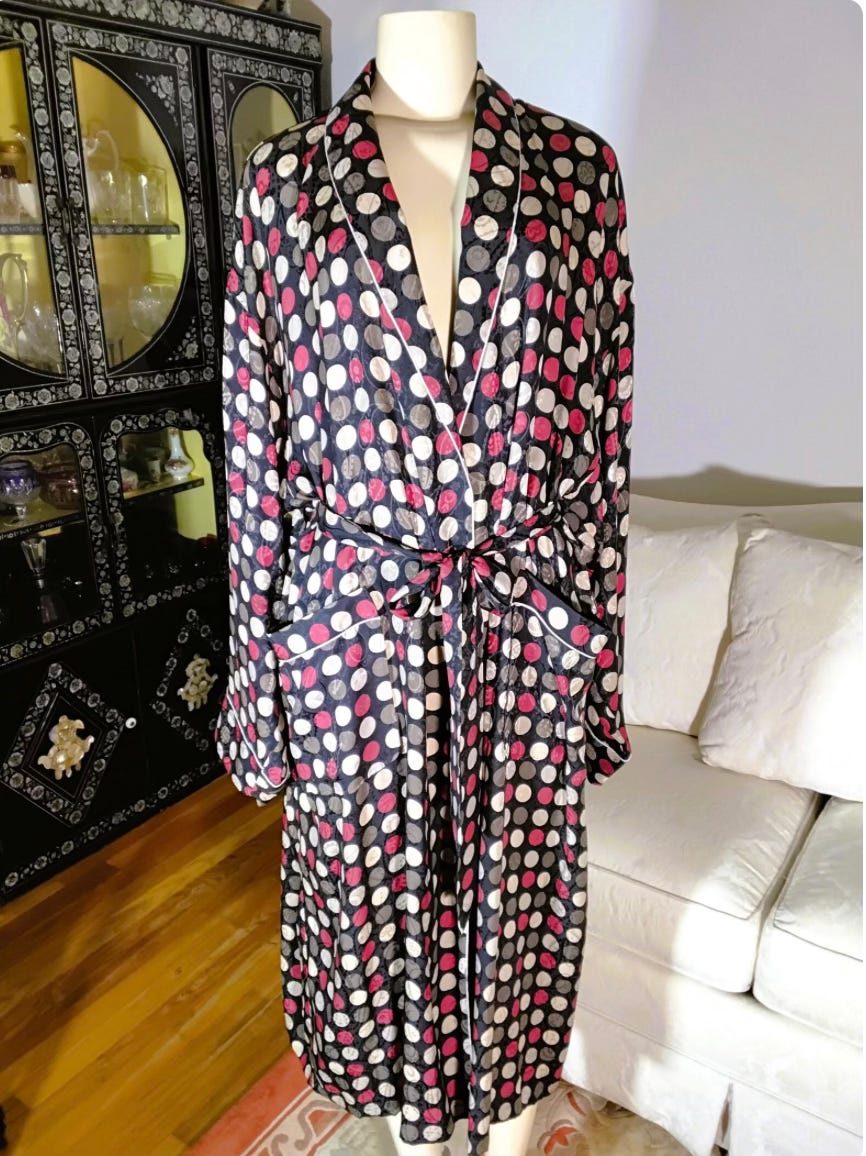
Silk pajama robes are being styled less like loungewear and more like outerwear — worn open as a duster, belted as a dress, or layered over jeans and a tank. The best ones are hiding in the lingerie section: look for real silk, relaxed sleeves, and prints that feel graphic rather than delicate. Bonus: Many big-name fashion houses (Flora Kung, Oscar de la Renta, Christian Dior) made silk pajamas and robes back in the 1970s, ‘80s, and ‘90s, so you might luck out with a really rare piece.
I quite like this one, by Flora Kung, for $36:
How to style it
Wear open over a tank and jeans like a lightweight coat
Belt it and wear as a dress with flat sandals or boots
Layer over trousers and a tee for contrast between tailored and soft
Search terms: silk robe, vintage silk dressing gown, printed silk kimono robe, 1980s silk robe, 1990s silk lounge robe
The rest of this list — including gold collar necklaces, vintage masks, and Murano glass lighting fixtures — is for paid subscribers. If you’ve been using this series as a way to thrift with more intention (and fewer misses), that’s exactly what the paid posts are for: more specific objects, clearer tells, and fewer dead ends.
You can subscribe below to read the full list and get access to the rest of this series going forward.
