


Here’s a hot take that sounds more pretentious than it is (I swear): One of the easiest ways to improve your vintage shopping results is to improve your vocabulary.
Learning about the specific terms associated with design can be mighty helpful when it comes to searching platforms like Facebook Marketplace, Etsy, 1stDibs, and the like.
Sometimes these terms are meant to describe decorative techniques (“trompe l'œil” comes to mind) or construction methods. Other times, they are architectural terms that migrated into furniture and decor (“brutalist” is a great example).
Learning those terms won’t just make you better at identifying things in person, but also help to refine what shows up when you search online.
This month’s searches all fall into specific, designy categories. None are object-specific, but rather words that tend to surface interesting things.
“tramp art”
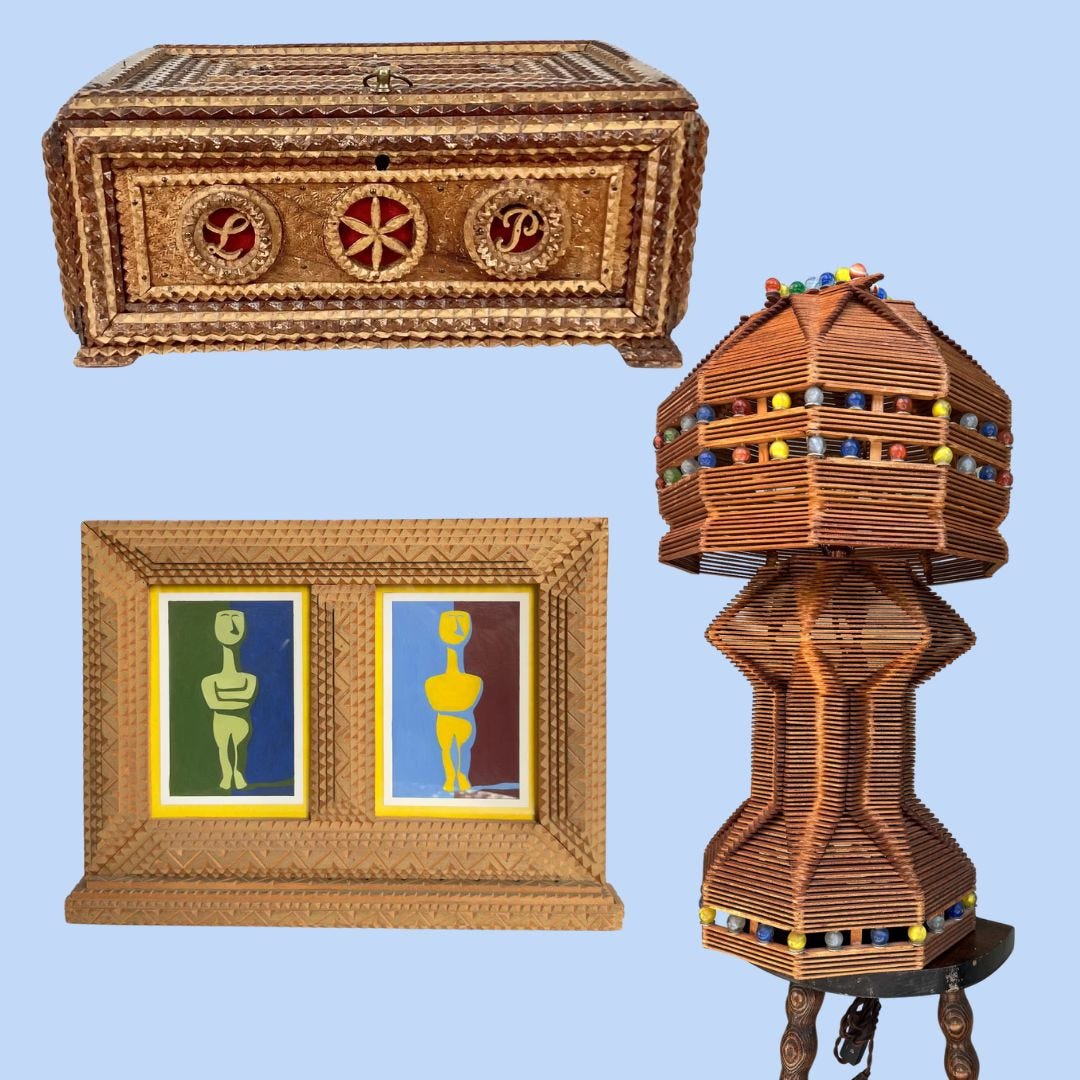
19th century box // popsicle stick lamp // standing frame
What it means: Tramp art is something of a cousin to folk art, and usually made by layering and carving thin pieces of wood (or whatever was laying around at the time — even popsicle sticks!) into highly textured geometric patterns. Most examples date to the late 19th and early 20th centuries.
The layered construction creates a deeply carved, almost architectural look, with repeating notches, corners, and stacked geometric details.
Examples:
tramp art mirror
tramp art frame
tramp art box
tramp art wall shelf
What I love about tramp art is that it adds texture in a way that feels collected rather than decorative. A tramp art frame around a simple photograph instantly makes the entire arrangement more interesting.
Because it falls somewhere between folk art, Americana, and decorative object, it can be surprisingly affordable compared to many other antique categories.
What to look for:
Deep, dimensional carving
Original patina
Materials including found objects (popsicle stick, bottle caps, etc.)
