


Tapestry has long occupied a tiny corner in the aesthetic attic of my mind.
For a long time, I thought of it as the sort of thing people inherited but rarely sought out. On Victorian chairs, footstools, folding screens, and the occasional wall hanging, it always read as a bit fussy and old-fashioned (at the very least, hopelessly out of step with contemporary trends).
In a word, it looked: dusty.
But in recent years and seemingly out of nowhere (though not really, we’ll get to that later): tapestry came back. And it’s now… sexy?
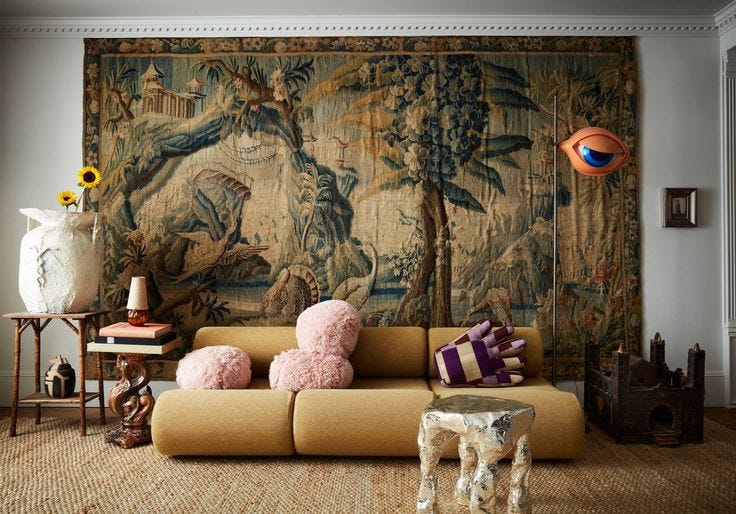
Tapestry is showing up everywhere these days: on upholstered beds, accent chairs, pillows, sofas, and even handbags. Some of the most expensive furniture being sold today is covered in fabrics that would have looked perfectly at home in an English country house 80 years ago.
Which, to be frank, is how we got to the trend in the first place. First, we had farmhouse (thanks, Chip and Joanna), which led us to Belgian Farmhouse (a bit more chic, more beige than white, less clinical), and then to tapestry-covered things.
I am embracing tapestry and have been bringing the trend into my own home (and closet) in small doses. My bed, for instance, is upholstered in a tapestry-inspired fabric and looks vintage, though it’s not.
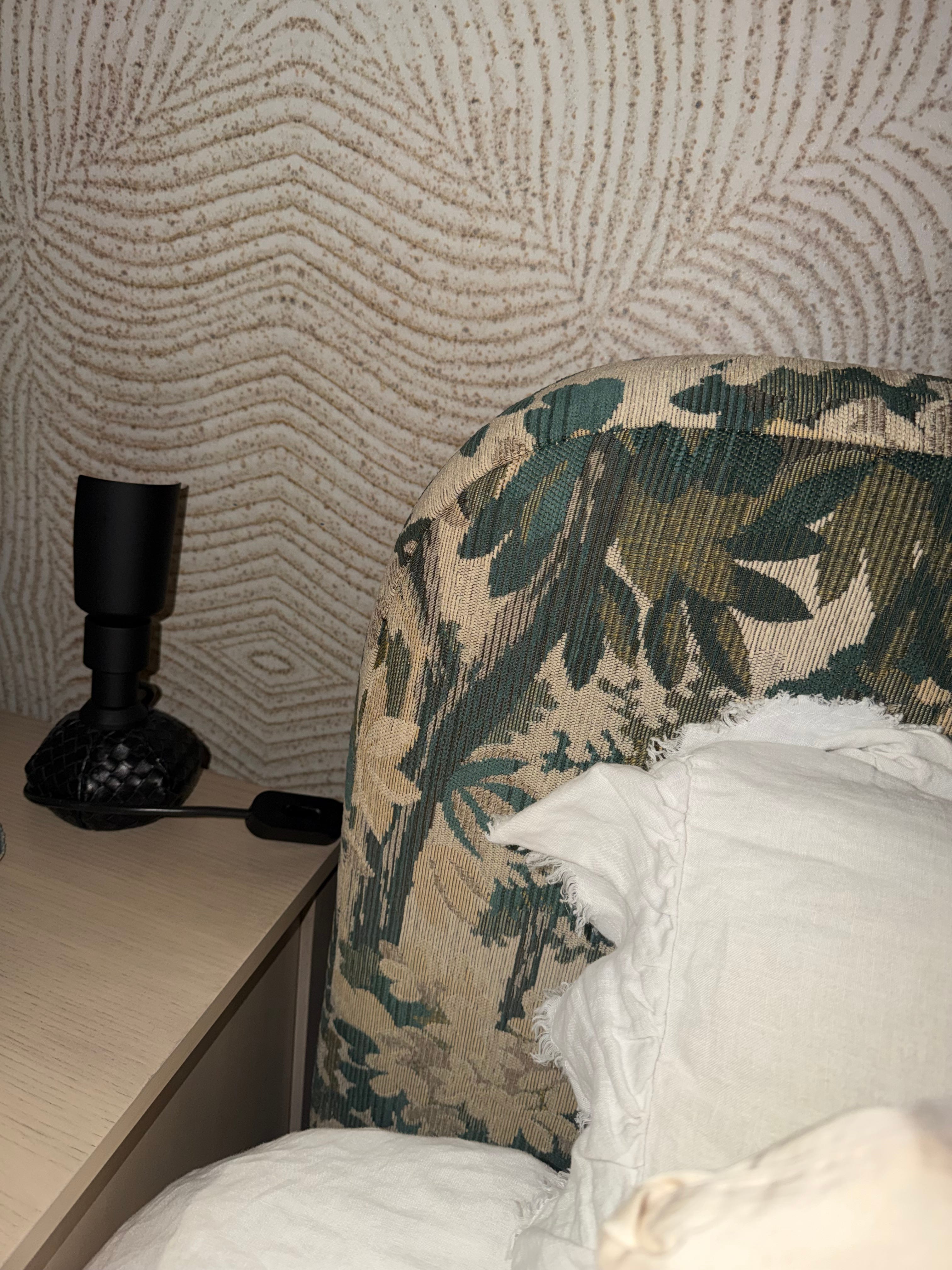
Tapestry goes with nothing and therefore goes with everything — kinda like animal print (I am a firm believer that you should treat animal prints as neutrals!)
I’ve also added some tapestry to my closet, in the form of this fab vintage bag I got at an estate sale recently for $40:
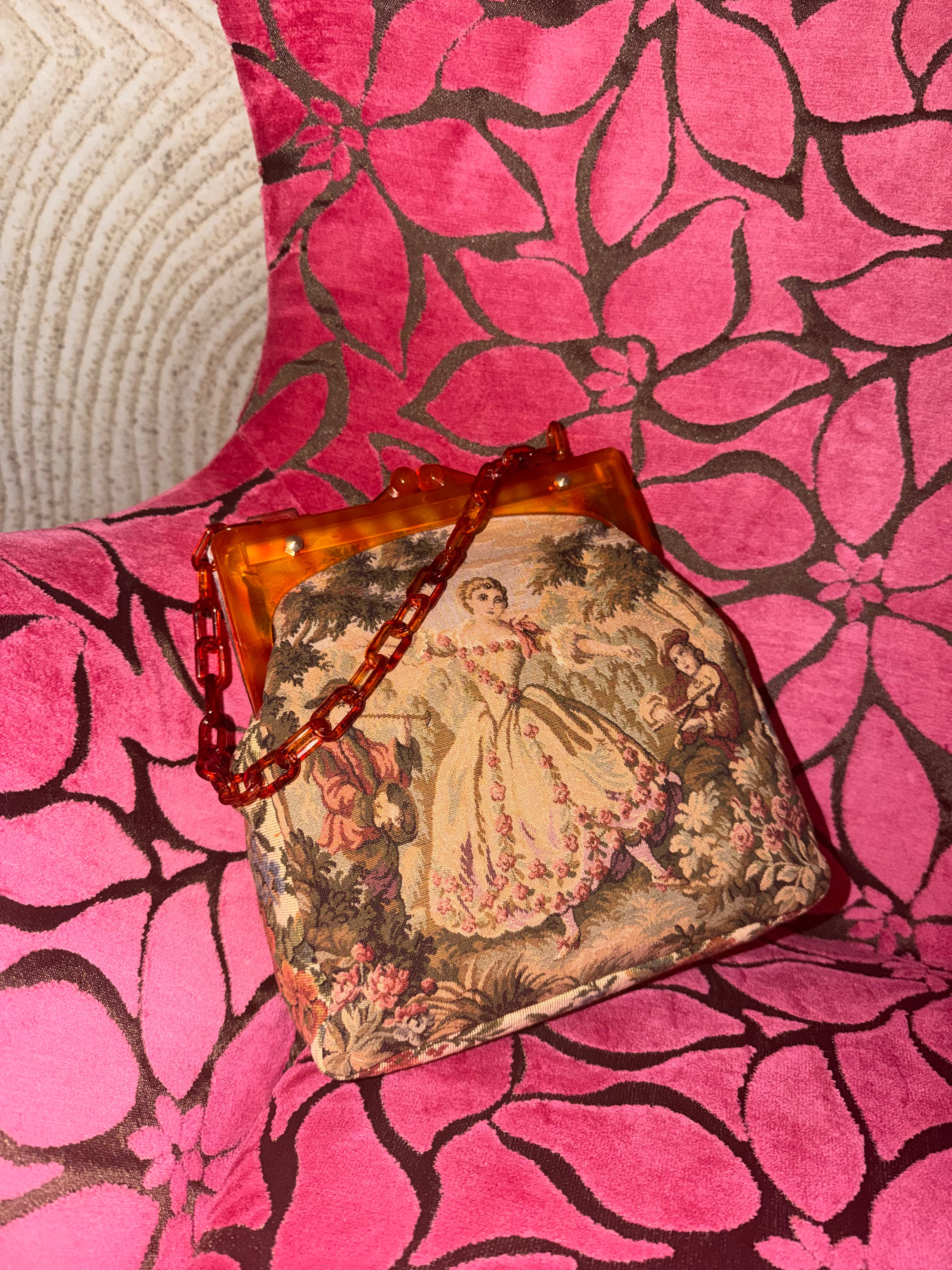
Given the opportunity, I will almost always choose the patterned version over the solid one!
Part of that is personal preference. I’ve never been particularly drawn to rooms that feel overly restrained. But I also think tapestry offers something that has become increasingly rare in contemporary interiors: visual complexity.
Much of the furniture sold today is very minimal and algorithm-formulated. It therefore relies on shape to create interest. Tapestry does the opposite. It introduces color, pattern, texture, and narrative all at once! Often the tapestry itself tells a literal story through its depiction which I think is so fun.
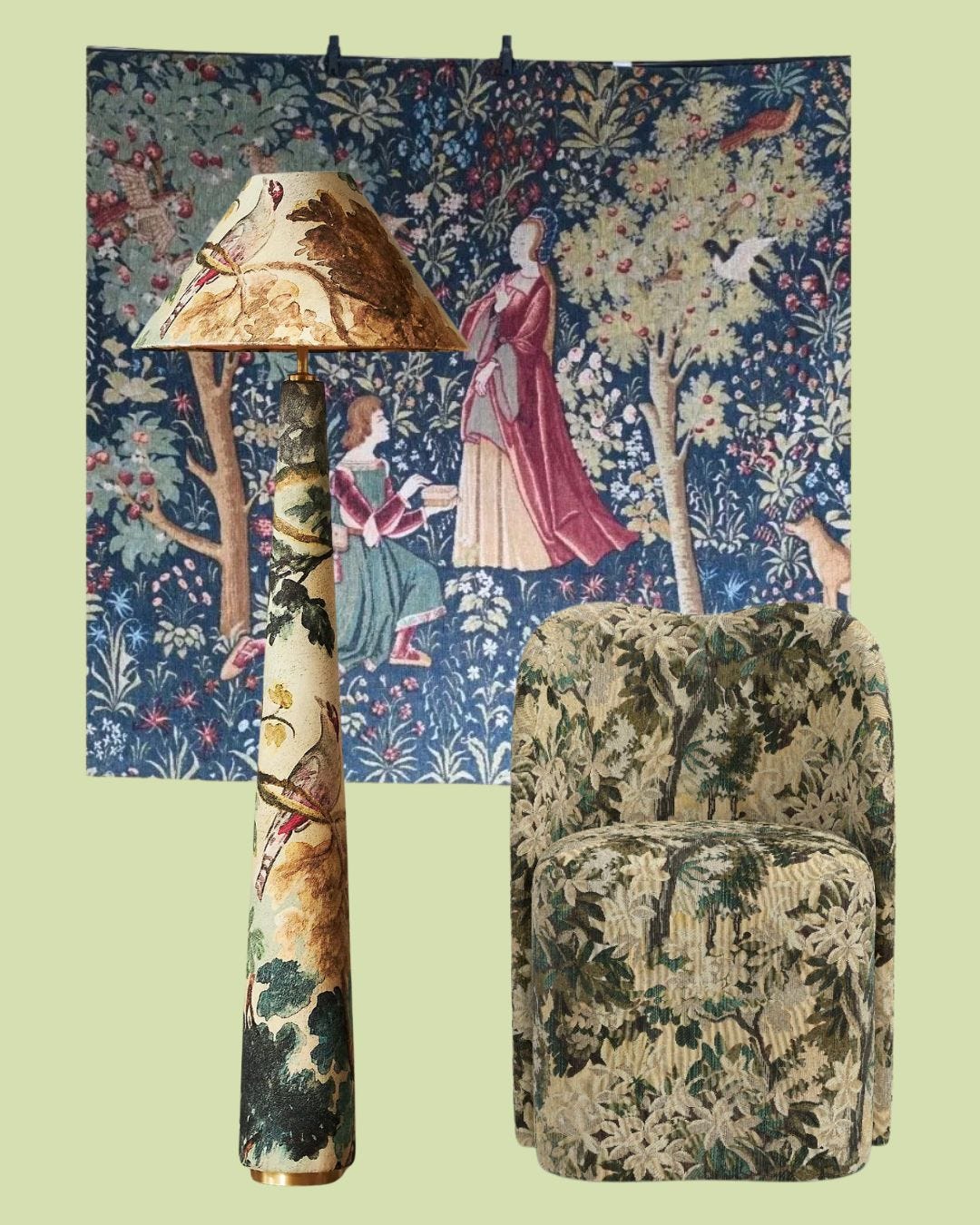
French Abusson tapestry with Medievel scene // tapestry floor lamp // dining chair
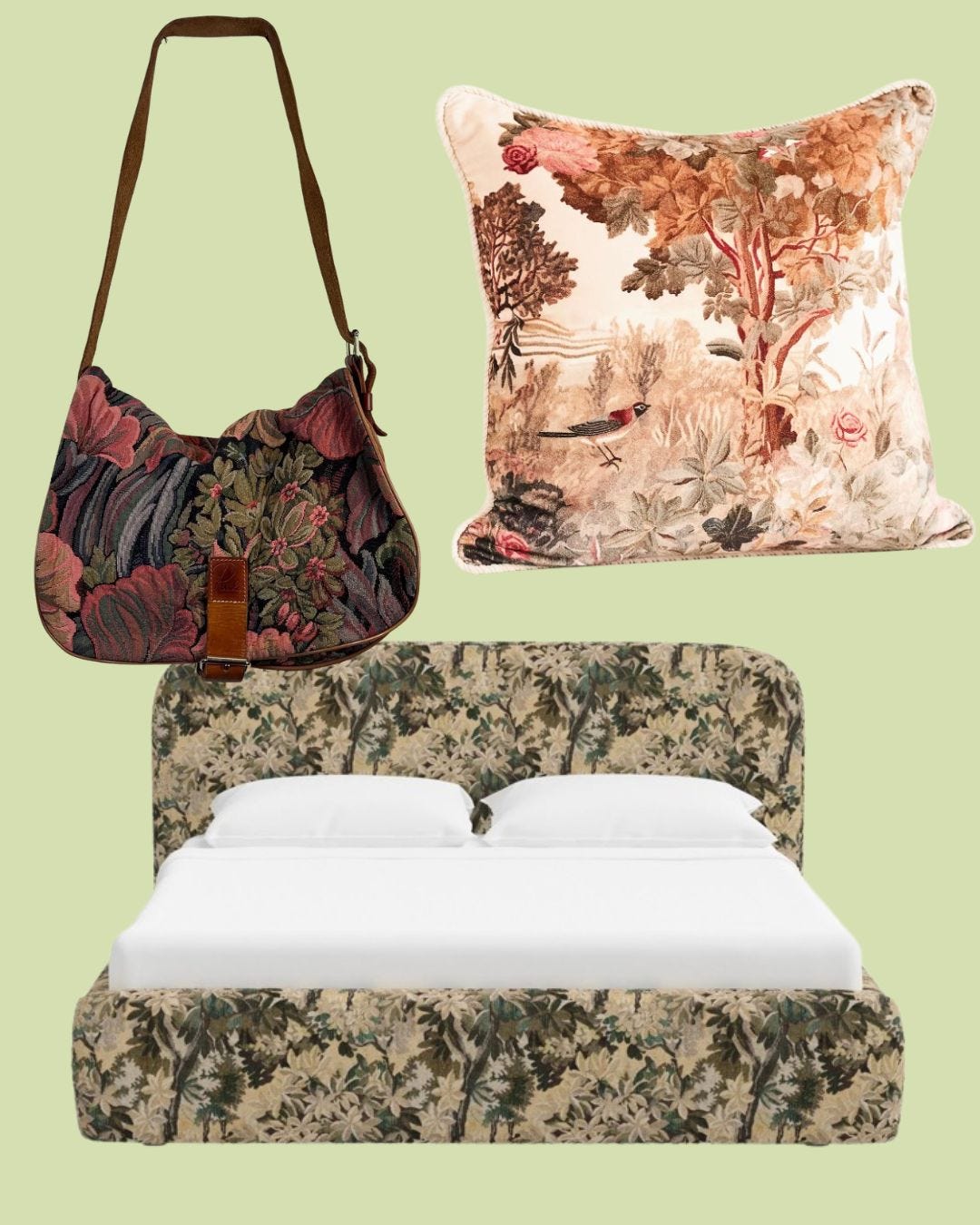
90s floral tapestry bag // tapestry pillow // tapestry bed
Where Tapestry Comes From
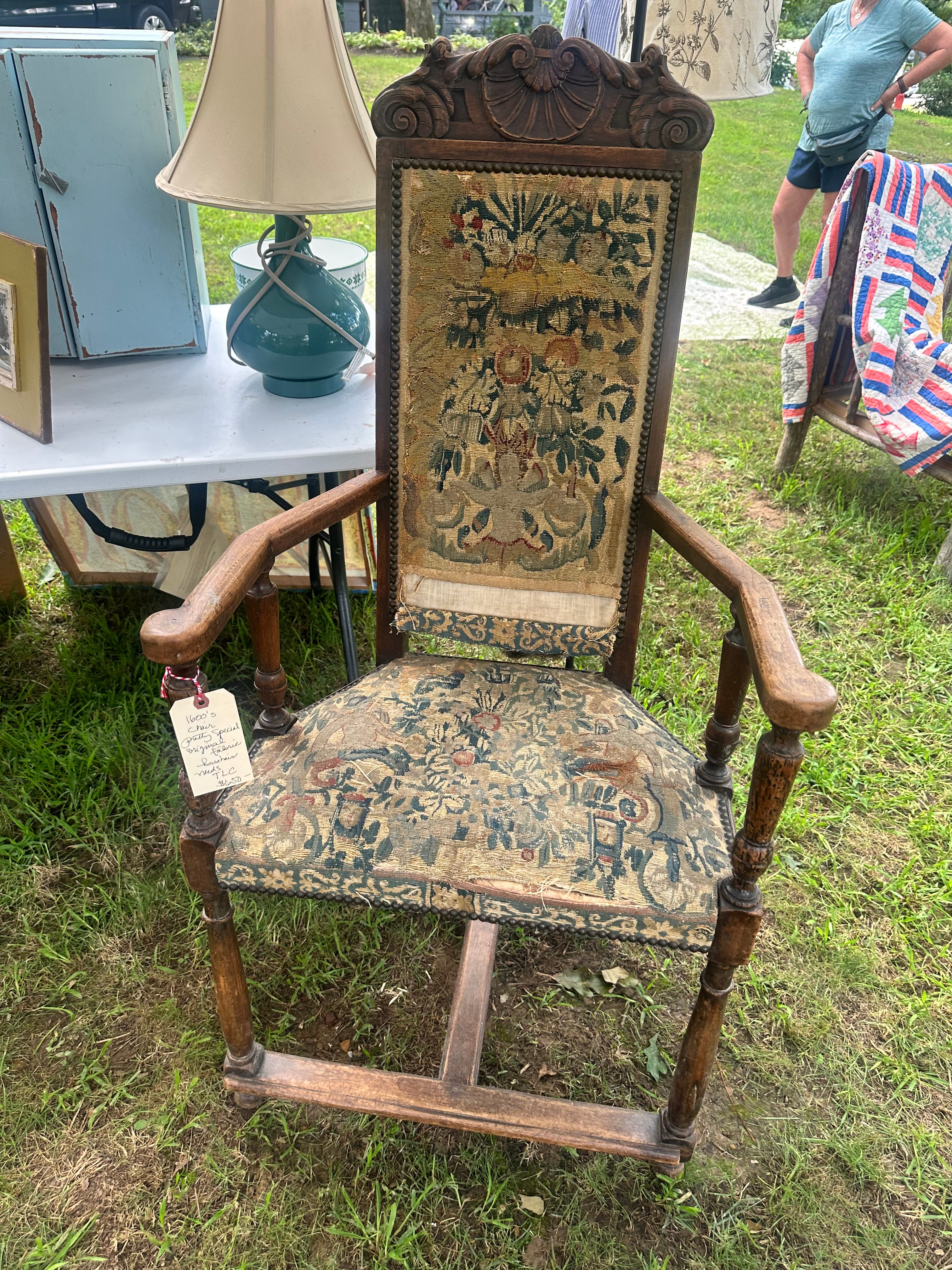
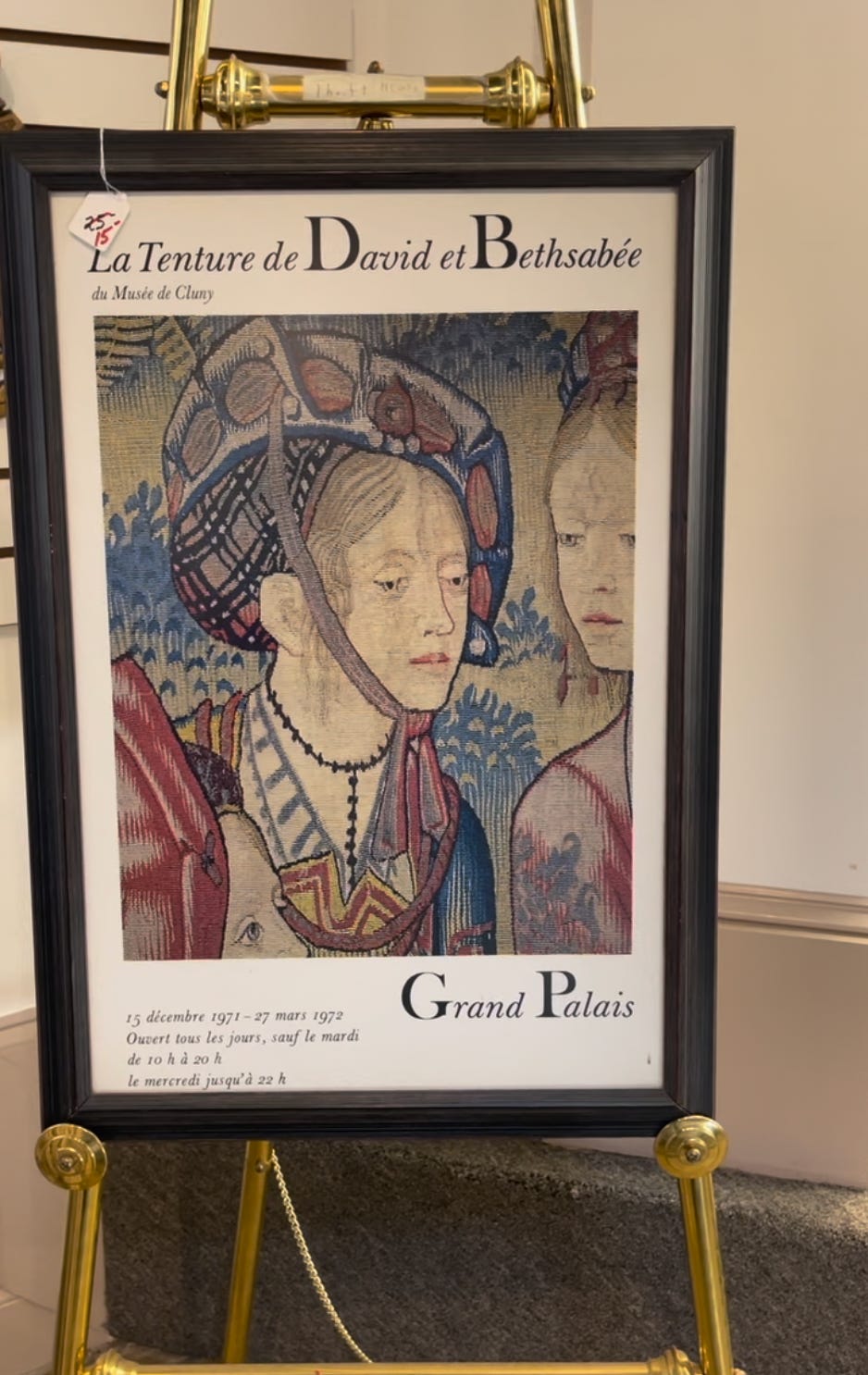
For centuries, tapestries served both decorative and functional purposes (beautiful, yes, but they also helped insulate stone walls and depicted religious and hunting scenes, mythology, and historical event)s. Some of the most famous tapestry examples came from workshops in France and Flanders, where highly skilled weavers produced intricate textiles for royalty and aristocrats.
The influence eventually spread beyond wall hangings and by the eighteenth and nineteenth centuries, tapestry-inspired fabrics were appearing on furniture, screens, cushions, and other smaller decorative objects. Advances in weaving technology made it possible to reproduce complex imagery on a larger scale, particularly through jacquard weaving, which uses a system of punched cards to create detailed patterns.
Many of the motifs we still associate with tapestry today (verdant landscapes, pastoral scenes, etc.) date back hundreds of years, so what looks trendy today is actually one of the oldest decorative traditions in Western interiors.
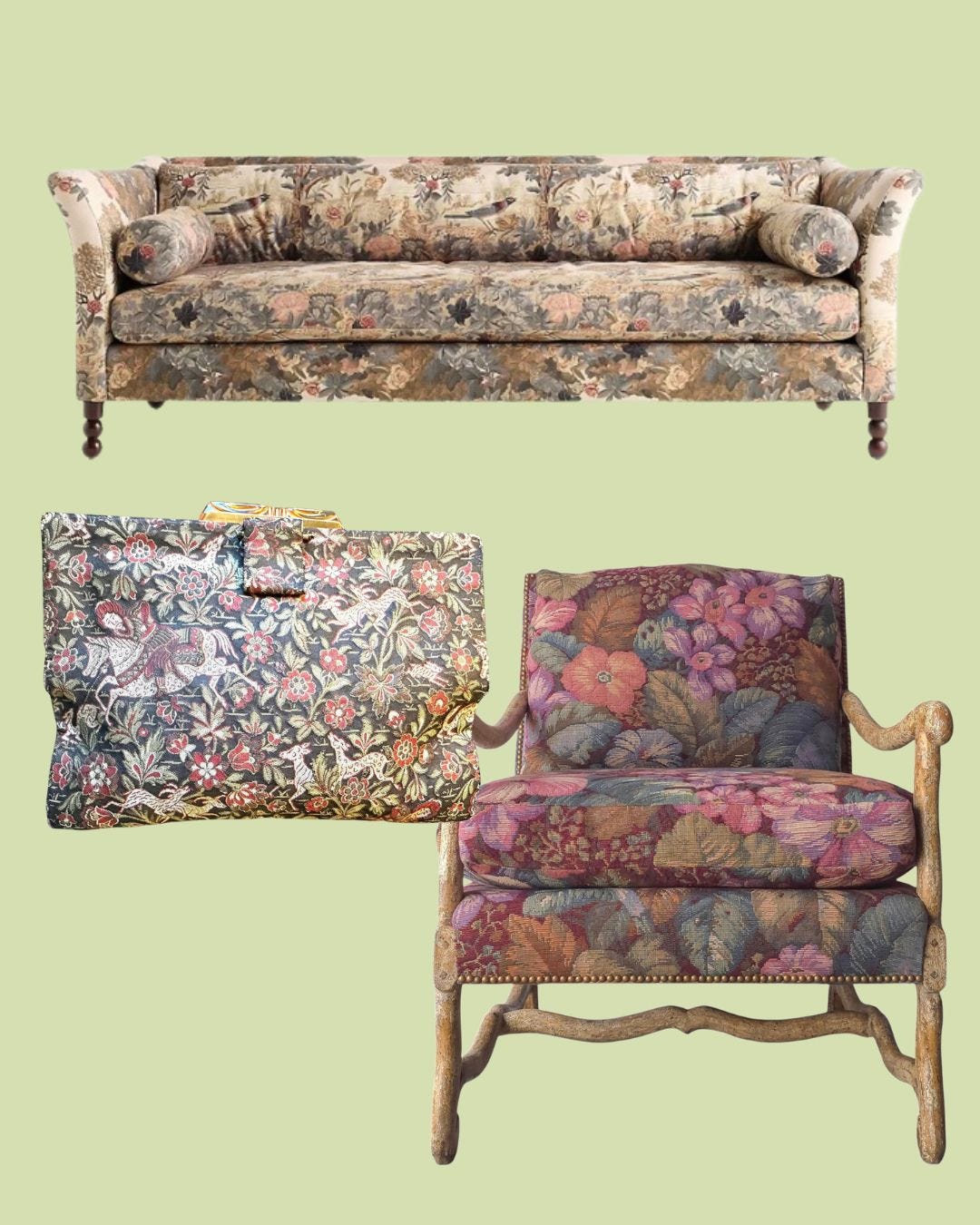
tapestry sofa // 1950s tapestry bag with lucite detail // rose-tapestry rustic chair
Why It’s Everywhere Again
The pendulum always swings when it comes to trends.
Recent years have favored simplicity (think the white walls, bouclé and light wood that have dominated your Explore pages for the past decade). While those interiors photographed beautifully, many of them shared the same visual language. Tapestry is something of a rejection of that, due to its color and texture and history!
As mentioned above, tapestry also aligns with several larger decorating trends that have gained momentum in recent years, like the rise of English country interiors, the popularity of layered and collected spaces, and a renewed interest in antiques.
I suspect people are also increasingly drawn to objects that feel as though they have a story behind them, because so much of what is available to the mass market has no story at all!
What I Look For
Large-scale florals
Hunting scenes
Verdure patterns
Aubusson-inspired motifs
Needlepoint upholstery
Jacquards
Avoid anything overly “muddy” or heavily faded
Pieces Worth Thrifting
Benches
Dining chairs
Accent chairs
Folding screens
Footstools
Headboards
Pillows
Wall hangings (which, if big enough, can be used as upholstery!)
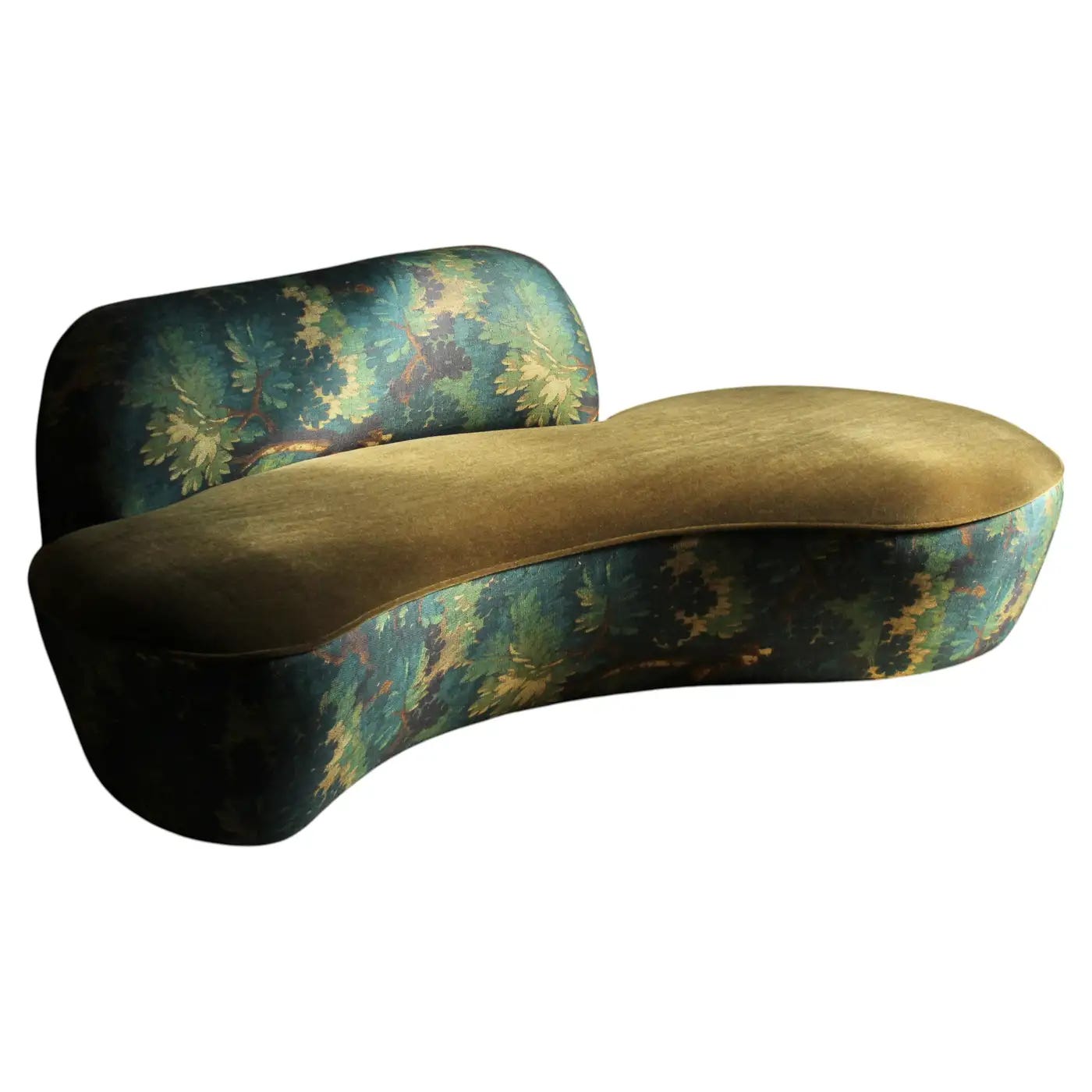
tapestry-backed Vladimir Kagan couch

If you have aches and pains but not the wherewithal or bandwidth to soak in an Epsom bath, might I suggest this Epson lotion (25% concentrated Epsom salt formula, plus Arnica, Capsaicin, and Aloe Vera)? Just rub it directly on sore muscles.
I’ve swapped most of my plastic for aluminum or glass and I recently bought this big water bottle. It’s insulated so it keeps things cool, huge so I stay hydrated, and fits in most cup holders.
One of my favorite ceramics lines has released a new lighting collection and it is So. Good.
I love tapestry too. It is so interesting to me, and let's not forget the originals of these bad boys were handmade by Ladies in Waiting, sitting around and, well, waiting.
I love those 1930s tapestry handbags, but they are SO not my style! I find tapestry challenging as a lot of it can read muddy. You’re so right on the pendulum swing, Virginia, everything comes around again! So buy it secondhand, right?
Love your eye! I’m going on a thrift shop this weekend and I’m so stoked!🤘