


I’ve been sharing my keyword lists here on Substack for a while, but I wanted to drill down on one specific category today: secondhand art.
I recently shared my tips for shopping secondhand art in person — where to find a signature, how to determine more about a piece, how to distinguish between a poster and a print, that kind of thing. But what about shopping online? What should you search to even find the good stuff to begin with?
As I’ve been finishing up edits on book two (2027 babes, don’t worry, it’s coming!), I’ve been thinking a lot about the language around secondhand. There are so many words that are very insider-y (“patina,” “folk art,” “outsider art,” etc.) and I want to break them down for you as best I can.
Some of those are great words to search when you’re looking for art on Facebook Marketplace and Etsy, but the thing is: most of them will turn up results from people who know their stuff. “Outsider art,” for instance, is just a fancy way of saying the art was made by someone who is untrained, but a non-vintage dealer probably wouldn’t list it that way on Marketplace. They would just write, “old painting.”
So here, I’ve defined all of my own go-to terms (and offered examples!), but also rounded up the broader words that might turn up good stuff from people who don’t know what they have (or just want to get rid of things quickly).
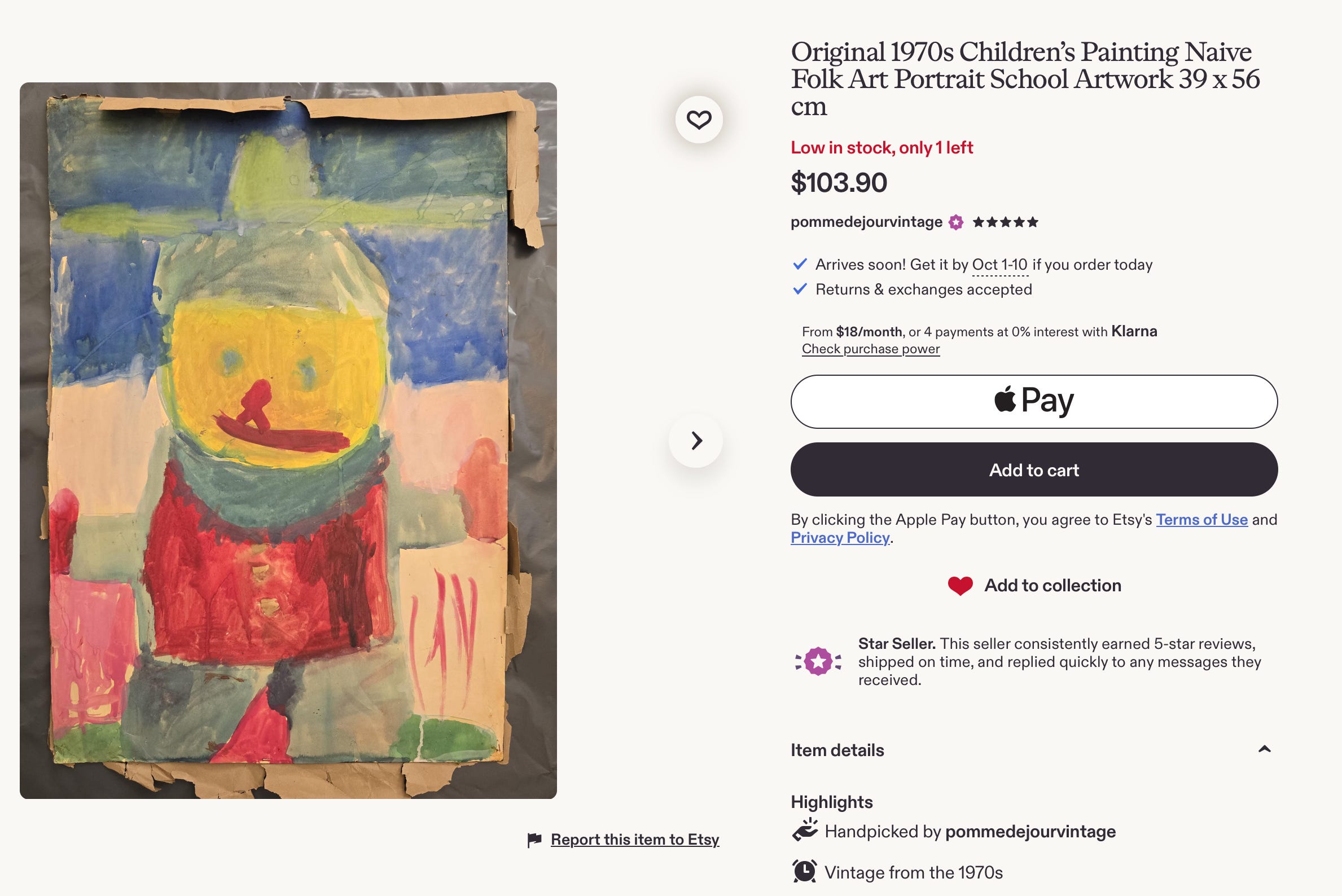
1. Outsider Art
What it means: “Outsider” or “folk” art typically refers to that by artists who are self-taught (i.e. not professionally trained), but some of it also has a very specific “look.” A lot of folk art, for instance, contains biblical imagery and has a sort of primitive quality to it (“primitive” is another word used a lot in the world of antiques, it just means basic or unrefined).
Keywords to try:
Vintage naïve portrait
Folk art portrait painting
Primitive portrait painting
Self-taught artist portrait
Outsider art
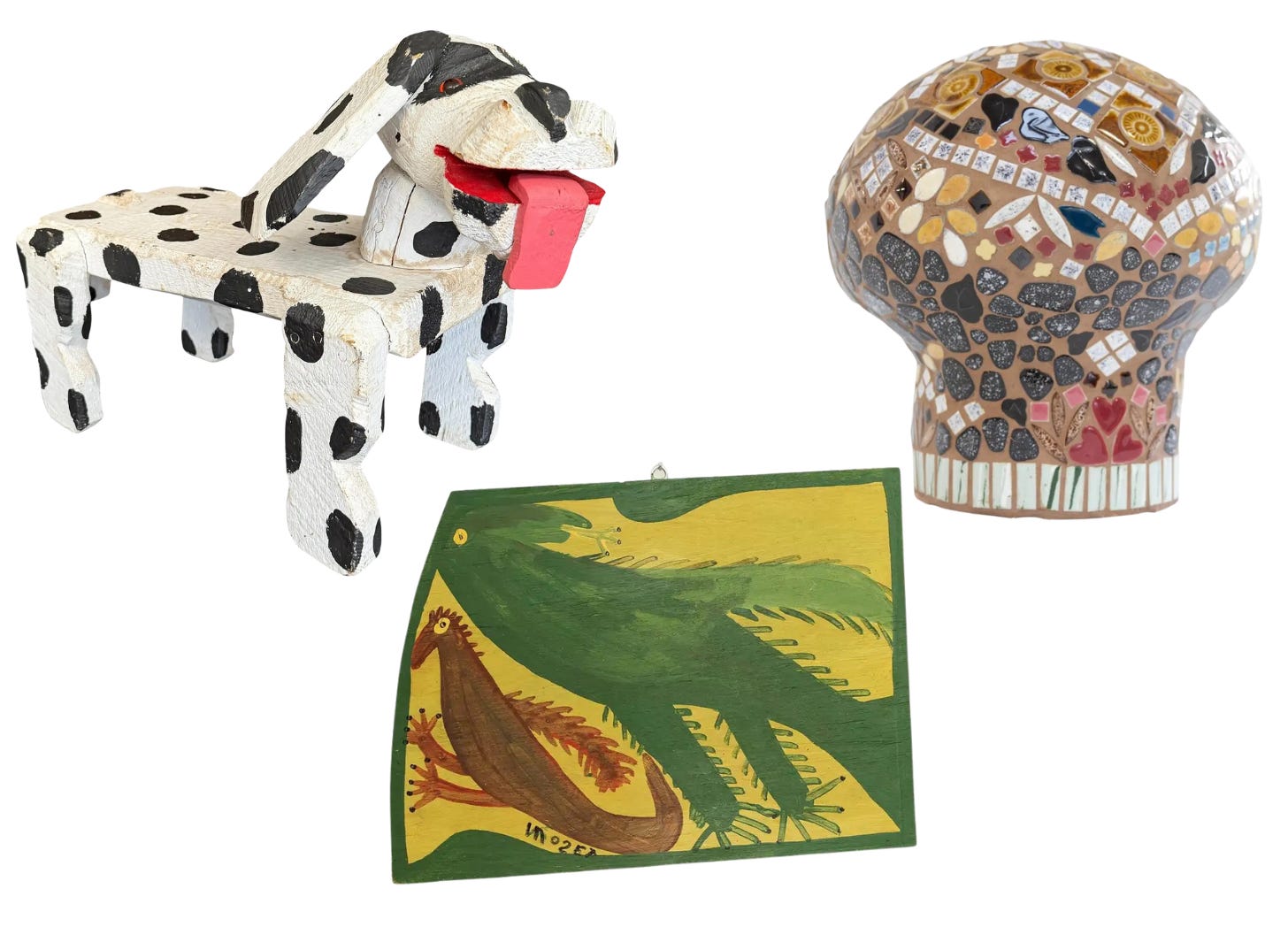
folk art Dalmatian // Swedish folk art piggy bank // Mose Tolliver painting
This post is for paid subscribers. Paid subscribers get my best finds, field reports, sourcing intelligence, market observations, deeply researched guides and the stories/opinions I don’t put on social media.
