


Here’s a hot take I recently shared on Instagram (that about half a dozen news outlets picked up and repurposed, so I figured it was high time I take ownership!): We are about to enter a Thrifting Golden Age. And I don’t mean this in some trend-spotting, “vintage is having a moment” sort of way, but because of something much more mundane: timing.
Right now, U.S. Census Bureau estimates that there are more than 73 million Americans over the age of 60, and that number is growing quickly as the Baby Boomer generation continues to age. By 2030, every Baby Boomer will be at least 65. That is a massive amount of people who, over the next decade, will be making the sorts of decisions every human has to make about their lives: whether to sell their homes and relocate closer to family, and, yes, how to part with their things.
And here’s the part that matters for anyone who cares about interiors and vintage: Baby Boomers have a lot of nice things.
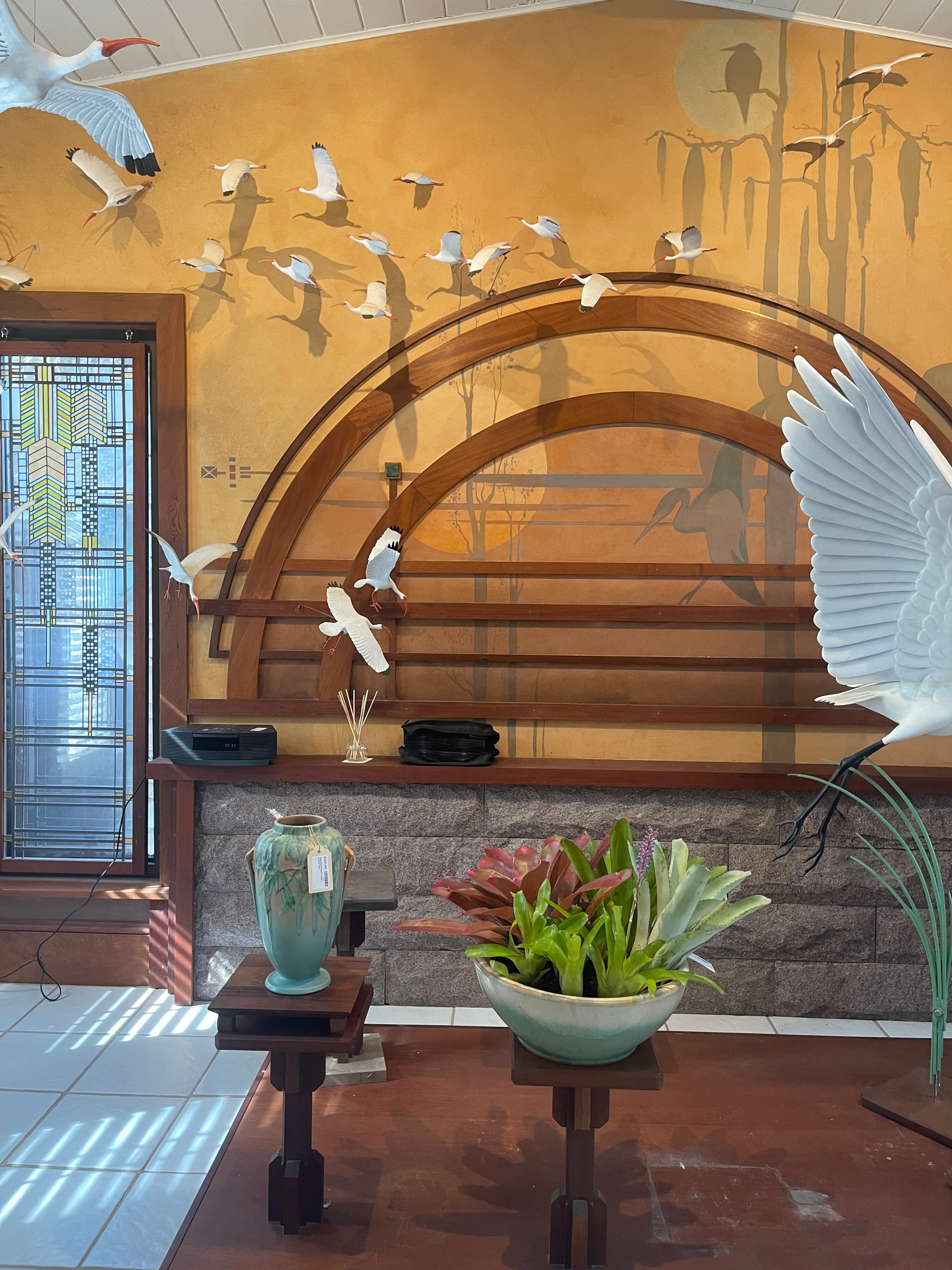
According to data cited by Realtor.com, Baby Boomers own roughly 38% of all homes in the United States — more than any other generation — and they’ve been in those homes longer, too. Which means those homes are often fuller. Not just with furniture, but with decades of accumulation, in the form of art, silver, lighting, textiles, ceramics, etc.
Meanwhile, Pew Research Center has reported that older Americans hold a disproportionately large share of the country’s wealth compared to younger generations. More wealth generally translates to higher-quality purchases (and more of them!!) especially when those purchases were made in an era when quality was simply the baseline.
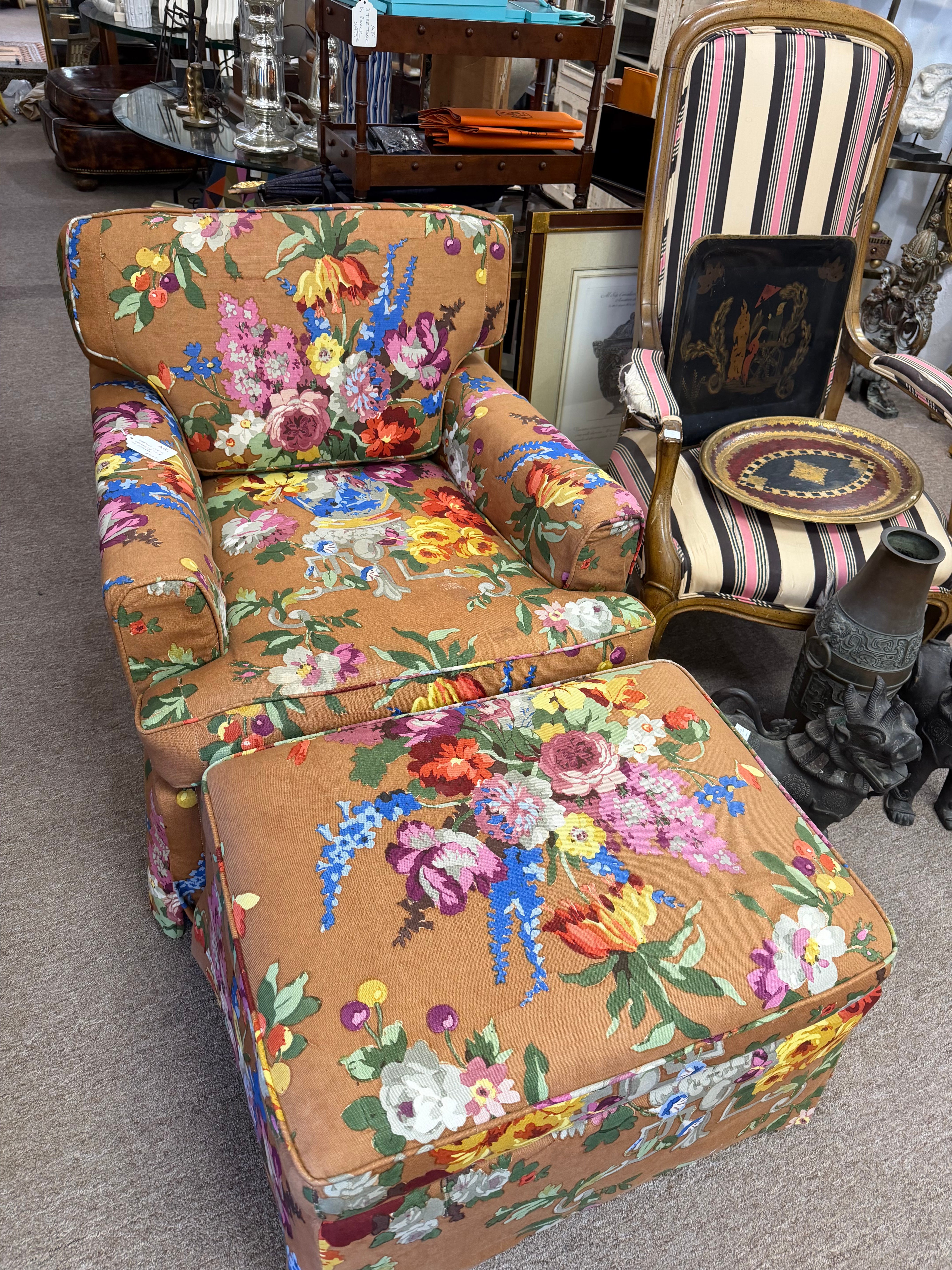
And that brings us to the other piece of the puzzle: Baby Boomers were furnishing their homes primarily in the 1970s, ’80s, and ’90s — time periods when even run-of-the-mill furniture was often made of solid wood, and blouses at the mall were made out of silk. Things were built to last, and the idea that you’d replace a dining table every five years would have seemed crazy.
The global furniture market didn’t always look the way it does now. The rise of what we now know as “fast furniture” (cheaply made, mass-produced, often disposable pieces) is a relatively recent phenomenon. Statista notes the explosive growth of low-cost, ready-to-assemble furniture over the past few decades, driven by globalization and e-commerce. Brands like Amazon made speed, scale, and affordability the priority. And in doing so, they reshaped buyer expectations. These days, made-to-last isn’t as ships overnight.
That was not the dominant mindset when Baby Boomers were furnishing their homes.
Much of what they bought — even at mid-range price points — was made with materials that have held up.
Department store furniture from the 1970s, ’80s, and ’90s often came from manufacturers that no longer exist or have since moved production overseas, lowering quality. The same goes for clothing and home goods: natural fibers were standard, not a luxury upgrade (this is why vintage clothing by mall brands like Express feels and looks so much better than the newer stuff). In the 1980s and ‘90s, silk wasn’t a “special occasion” fabric. Wool wasn’t niche. Jackets and blouses and pants were lined, finished, and built to last because that was the expectation, not the exception.
Baby Boomers are a generation that spent decades buying — often well, and at scale — and they are beginning to release those objects back into the world. I don’t mean to frame this as opportunistic or morbid, but just with the very real knowledge that we all simplify as we age. We decide we no longer need twelve sets of china or a formal dining room that seats ten, and those things have to go somewhere.
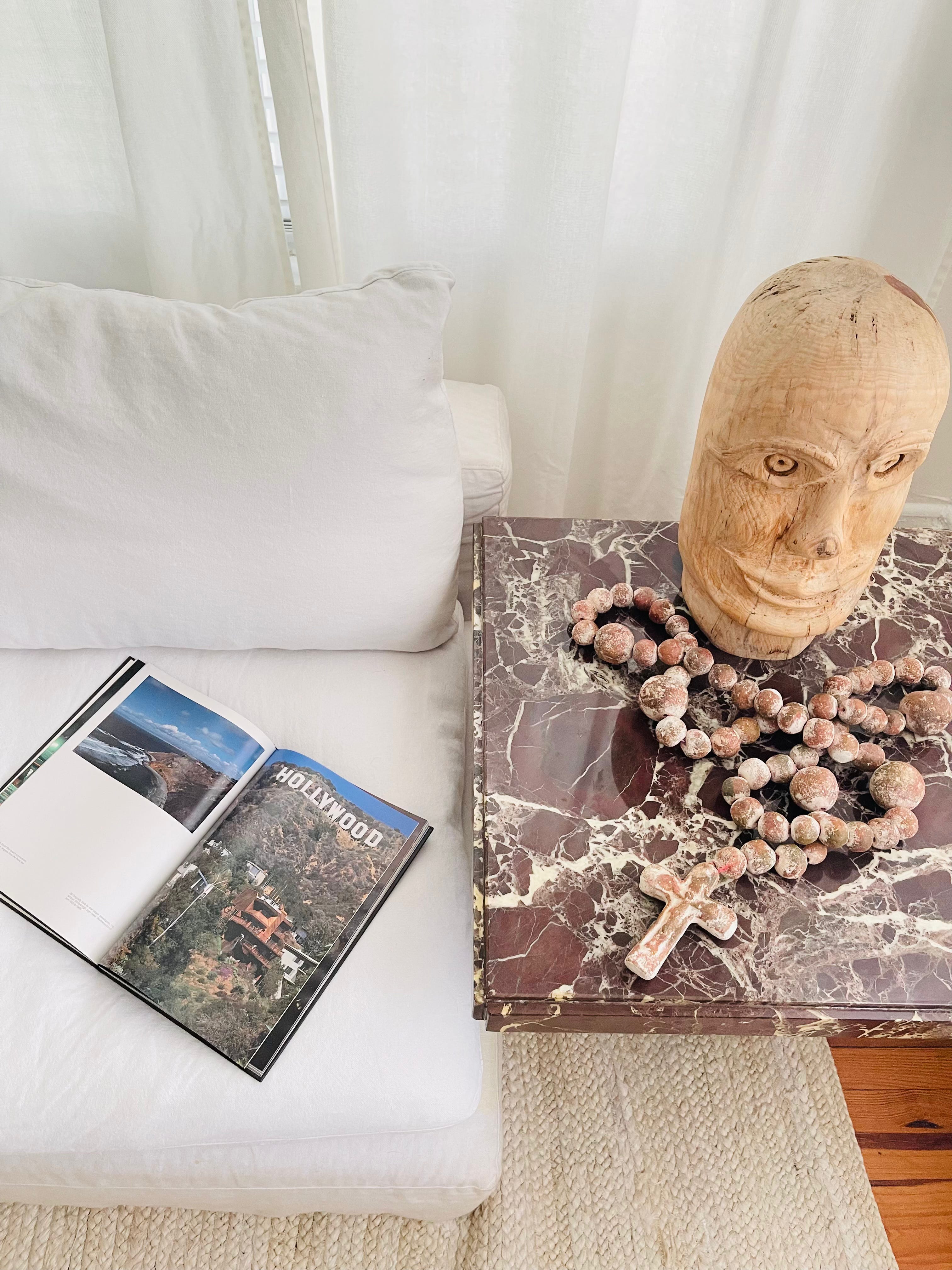
So, all that “stuff” winds up at estate sales or gets donated or taken to a consignment shop. It ends up in thrift stores in suburban strip malls and church basements and yard sales…. places you would not, at first glance, expect to find anything remarkable.
But if you understand what you’re looking at (the materials, the makers, the construction) you start to realize that many of the best things in the rooms you see in Architectural Digest today can be found in those same unlikely places. And we can all have access to these incredible pieces, but we need to train our eyes to see them. That way we’re not defaulting to buying brand new versions of furniture and accessories that are often worse in quality, and instead buying pieces that were made to last and will continue to look better over time.
The reality is, Baby Boomers came of age in a completely different economy — one that allowed them to buy homes earlier, stay in them longer, and furnish them over decades with things that were, almost by default, better made. They had access to higher-quality manufacturing, and they bought with the expectation that what they brought into their homes would stay there.
Younger generations have had a very different experience. Housing is more expensive, people move more frequently, and fewer people are buying with permanence in mind. And when you’re renting, you’re less likely to invest in a lifetime dining table — instead, you turn to IKEA. When you’re moving every couple of years, you’re not collecting sterling silver or building out a fully furnished dining room — you’re getting all your odds and ends at Target.
So what you end up with is a generational imbalance: One generation accumulated a vast number of high-quality, long-lasting objects. The next generation largely did not.
And now those well-made objects are beginning to re-enter the market — not as relics, but as some of the best (and most affordable!) options available.
This is not theoretical, by the way. It’s already happening. We are in the early stages of what economists call the Great Wealth Transfer (some call it the “Silver Tsunami”) which is expected to move tens of trillions of dollars (and assets) to younger generations over the coming decades.
If you know how to recognize what you’re looking at (i.e. if you understand the materials, the makers, the construction) you can build a home that feels layered, personal, and genuinely valuable without spending anything close to what those pieces would cost new today.
So, Here’s What to Look For
Now for the part you’re probably here for: How do we navigate this Tsunami of Stuff?
Because not everything coming out of these homes will be extraordinary!
A lot of it will be dated, overly ornate, or simply no longer useful (Remember those big armoires we used to house our televisions in the 1990s? those are useless in the world of wall-mounted flat-screens).
But a surprising amount of this “stuff” is extremely valuable — either financially, stylistically, or both.
Here is where I would focus:
Silver
This is the big one.
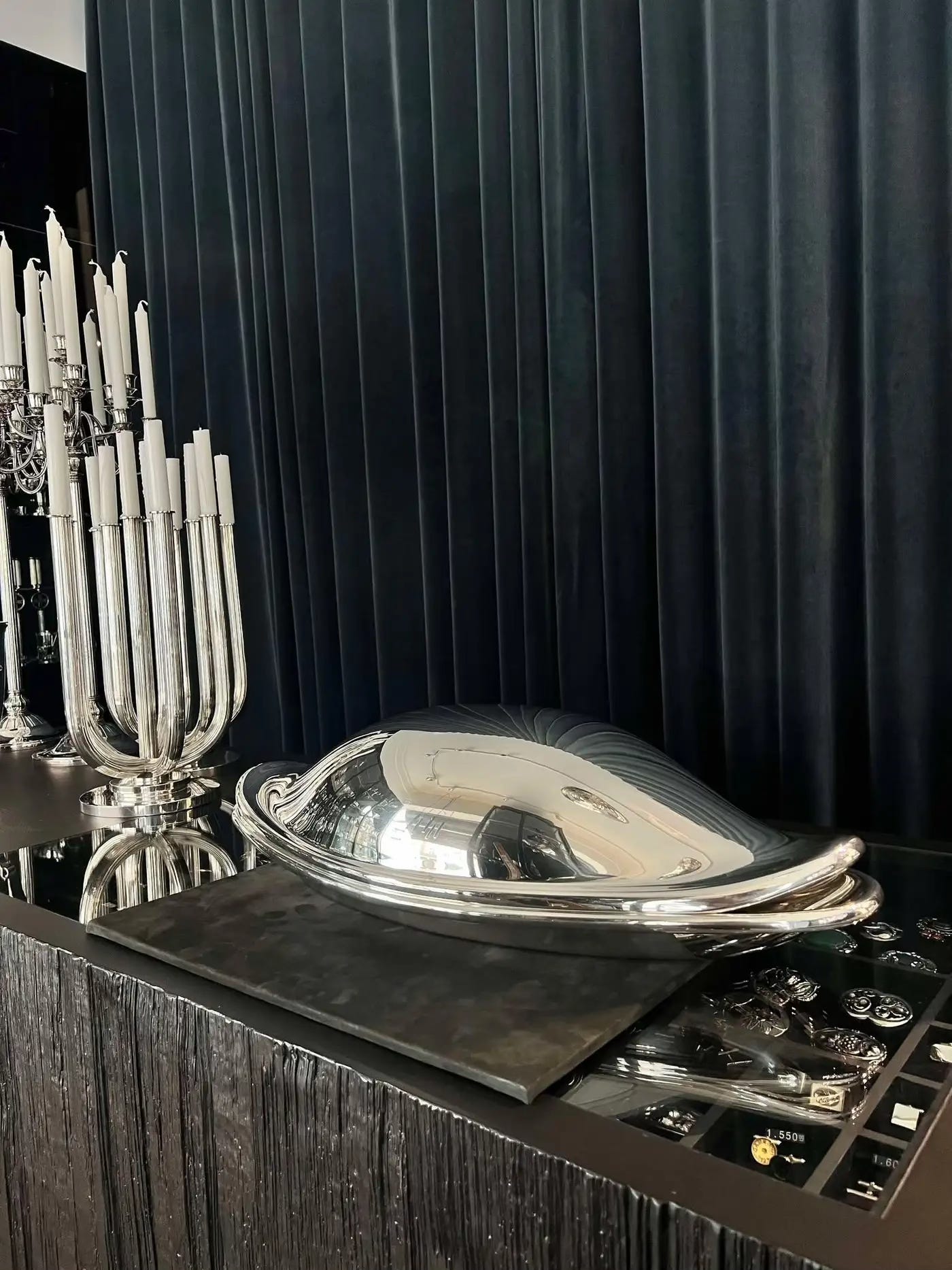
Sterling silver — especially from known makers — is still dramatically undervalued in many thrift stores and estate sales, even as it’s been having a very real resurgence recently. It’s one of the few categories where the upside is built in: you’re buying something with intrinsic value, but also something that immediately elevates a space.
Even when a piece isn’t particularly rare or important, it still has material value. (Silver has a melt value, which means there is always a baseline price someone will pay for it). And beyond that, it’s one of those materials that reads as expensive instantly: a silver tray, bowl, or set of flatware brings a sort of sophistication that’s hard to replicate with newer objects.
Look for:
Makers like Tiffany & Co., Georg Jensen, Gorham
Weight (it should feel heavy)
Well-Made Furniture
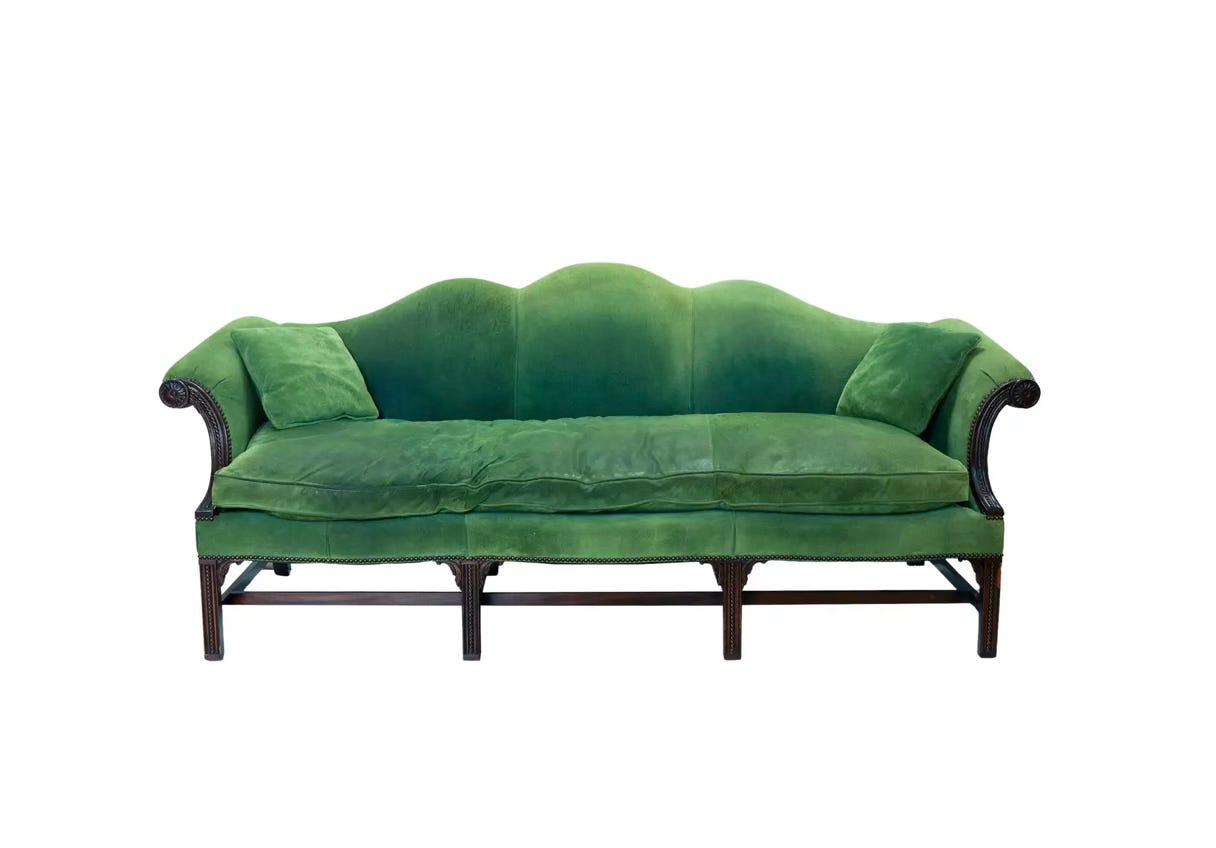
This is a category people overlook often (furniture feels intimidating), but it’s the easiest place to start, IMO.
Look for:
Solid wood (not veneer over particle board)
Dovetail joints
Drawers that feel substantial
Pieces that are, frankly, a little too heavy to casually move (often priced less because the sellers want to get rid of them!)
Brands like Ethan Allen, Henredon, Thomasville, and Century — the kind of furniture that was widely available at the time, but still made with real materials and decent construction
Design-Forward Pieces
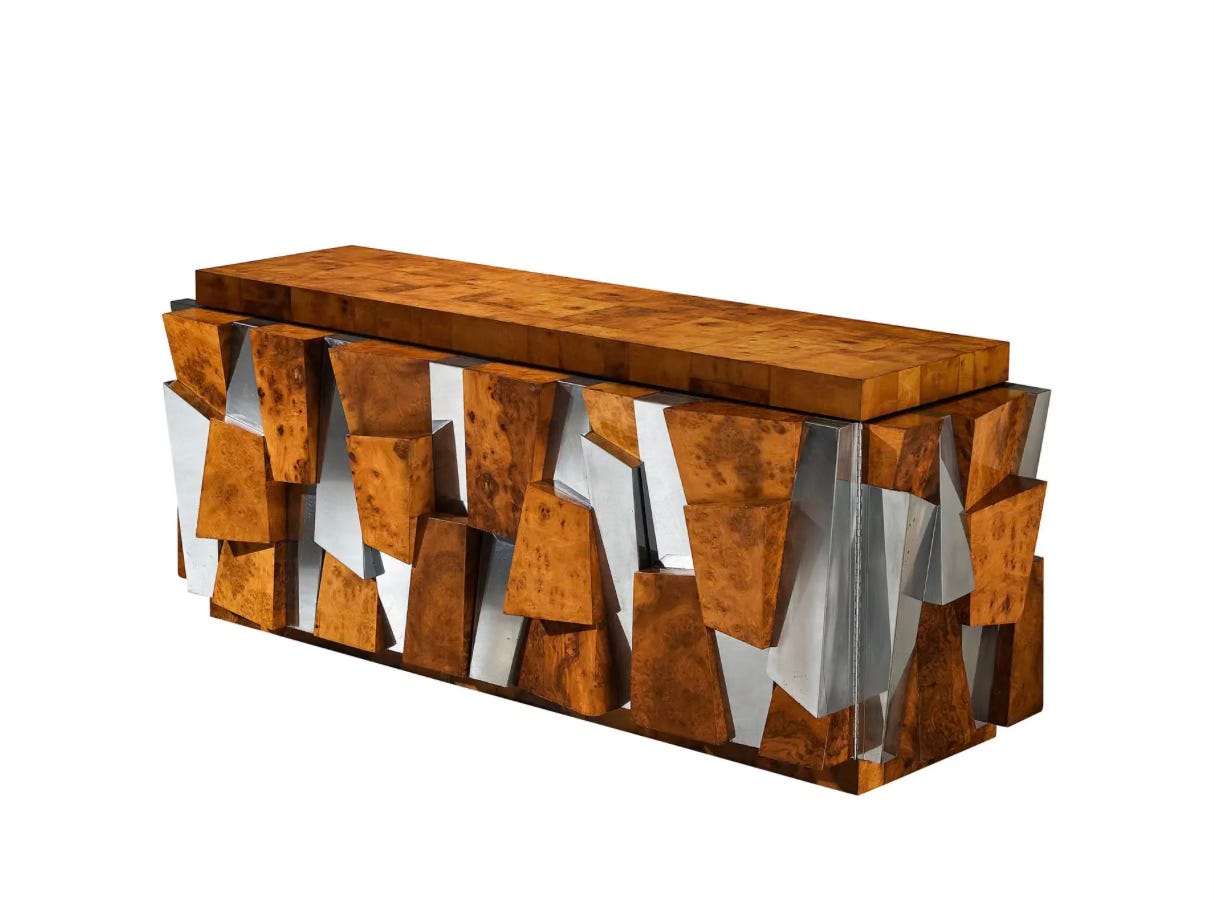
Then there’s a second category of furniture and this is where things get more fun.
Baby boomers were furnishing their homes in the 1970s, ’80s, and ’90s, at a time when what we now call “midcentury modern” wasn’t collectible — it was just used furniture. So they were often buying pieces from the ’50s and ’60s secondhand (or inheriting them), alongside newer, more contemporary designs.
At the same time, they were also buying what was current in the 1970s, ‘80s, and ‘90s — which means we are going to see everything from mid-century to postmodern furnishings showing up at estate sales and thrift stores in the coming years.
Look for brands like:
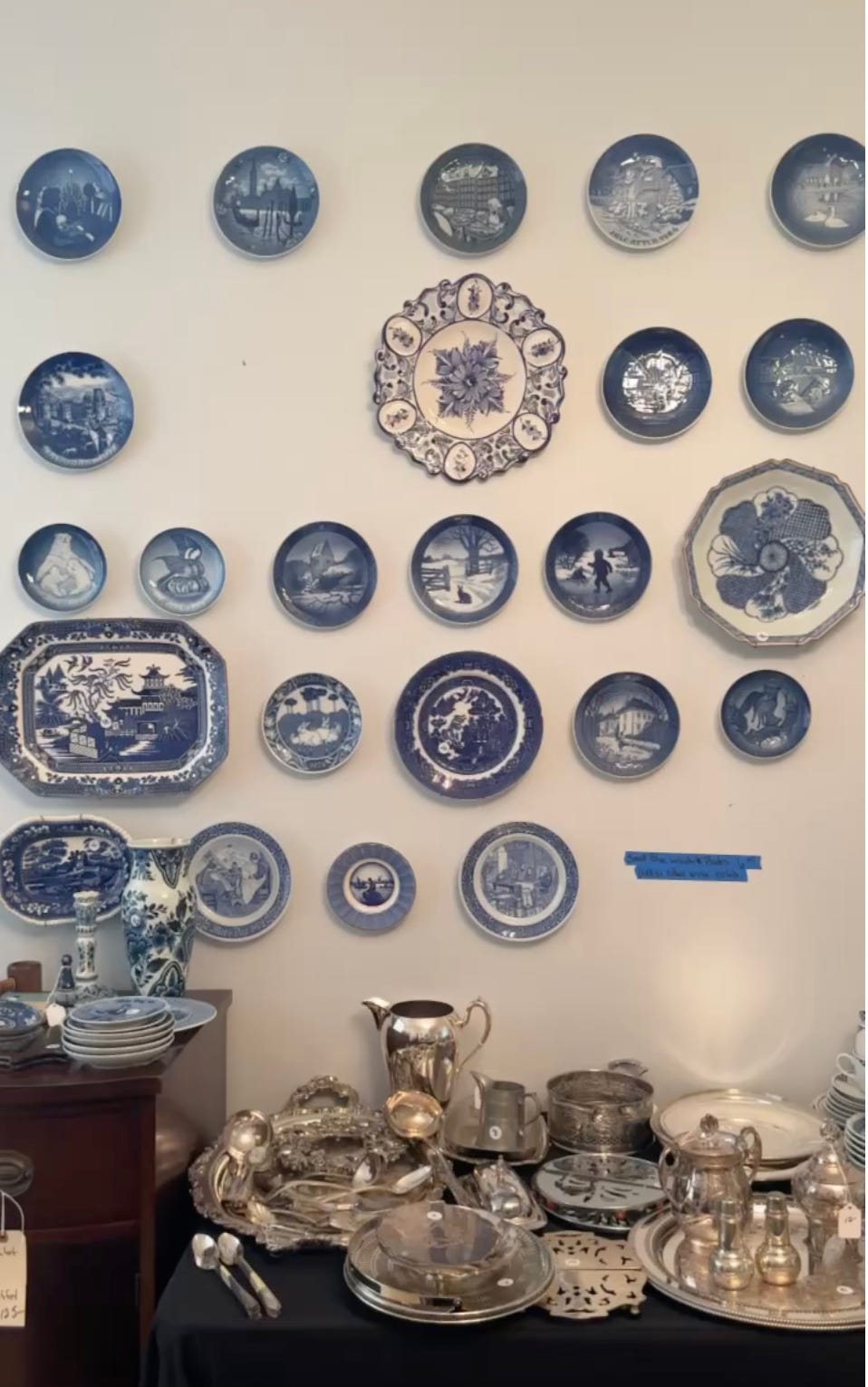
China, Crystal, and Formalware
These cottagecore/old-fashioned accessories are already starting to come back into favor, especially as entertaining culture shifts again. And at thrift store prices, the downside risk of investing in china is low.
Look for:
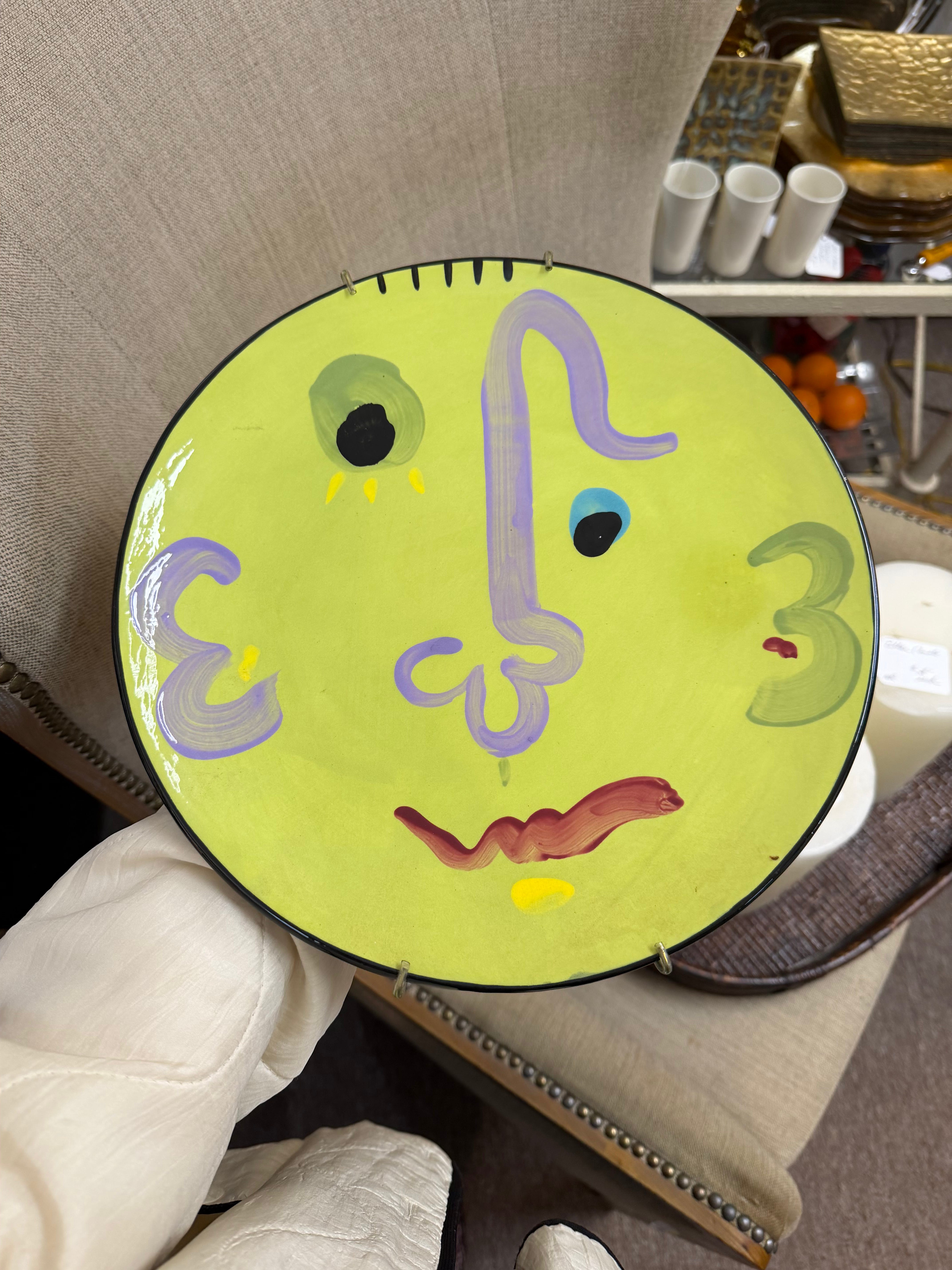
Decorative Objects
These are the pieces that make a home feel layered instead of staged and are some of the most fun to find and shop for.
Look for:
Marble
Brass and bronze
Figural objects
Hand-carved anything
Studio ceramics
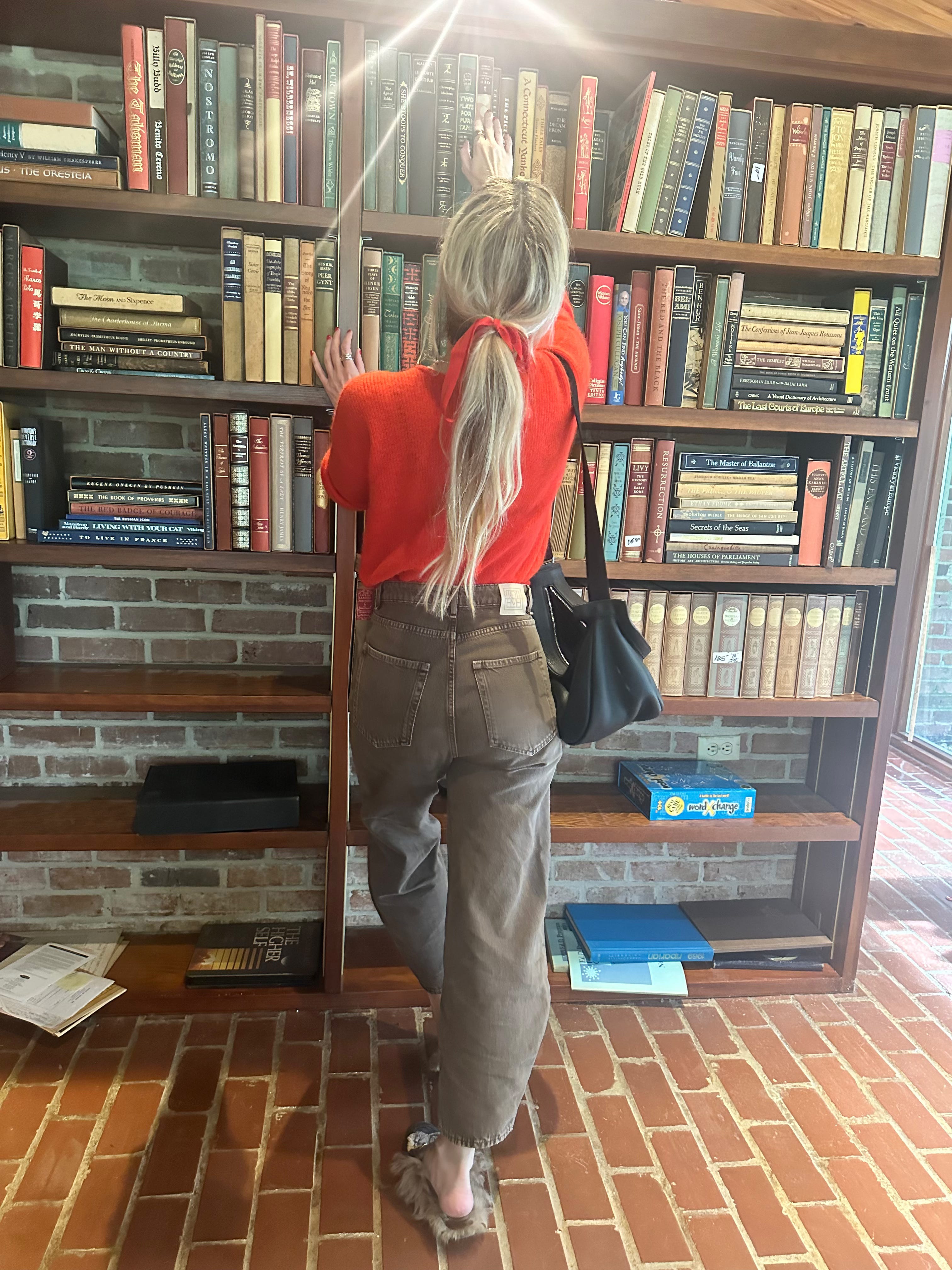
Books, Art, and the Things You Don’t Always Know to Look For
Boomers bought:
Original artwork
And they loved trinkets and odds and ends … many of which feel so artful and gorgeous.
And all this means you will find things you didn’t even know to look for in this Thrifting Golden Age. And I think (and hope!) we will all develop more personal taste and unique POVs as a result.

A few things that make sense to buy new — either because they’re hard to find secondhand in good condition, or because they complement the kinds of pieces you should be thrifting:
Doormats from Ruggable — doormats are one of the few things that are nearly impossible to buy secondhand for obvious reasons, and these are washable, which makes them actually practical. They also do a good job with vintage-inspired patterns, so they don’t feel out of place alongside older pieces.
Porcelain from Richard Ginori — this is a company that’s been producing porcelain since the 18th century, and their patterns have held up for a reason. You can find Ginori secondhand (and should, when you can), but it’s also a good reference point for what to look for in terms of quality and design.
Custom framing from Framebridge — if you’re buying vintage art (or even just interesting paper ephemera), framing is what makes it feel intentional. I use this company all the time — it’s an easy way to make something you found for very little feel finished and worth keeping.
**This newsletter may contain affiliate links or gifted items. I only share things I genuinely use or would buy myself.
Great article & original topic. Excellent read & insight. And you’re the first I’ve seen make the correlation between the demographic and design opportunities. Thanks for the whip smart info.
I have news for you. Those young people have no interest in any of it. Their parents offer them things and they can't bother to look at it.