


Recently, a reader sent me a note that made me really happy. She’d been at an estate sale and picked up a side table because she liked the shape (and that it was weird!). Turned it over, saw a stamp, and recognized a name: R&Y Augousti.
She knew the brand because she’d read about it here and followed many of my other tips!
Presumably, she was the only one in that room who knew what it was, so she paid estate-sale pricing for a piece that regularly sells in the low four figures.
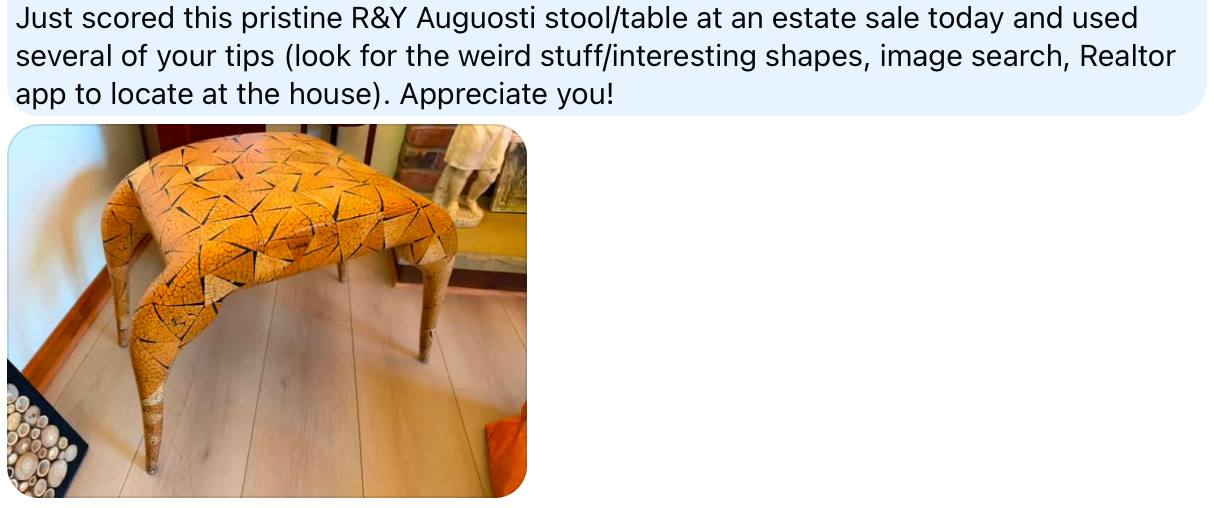
That’s not luck, btw; it’s putting knowledge into practice — and having a knowledge base is truly the single most valuable skill in thrifting, IMO.
Time in the field absolutely helps! Spend more time in more stores, dig through more bins, get up earlier for more estate sales, and you are bound to find something.
This is especially important during what I’ve called the Thrifting Golden Age: the once-in-a-generation transfer of furniture, art, and decorative objects into the secondhand market as older generations downsize. The good stuff is out there right now, but only the people who recognize the patterns will bring it home.
I’ve spent years building a mental catalog of the brands, makers, and signatures that are worth the buy. Some are well-known enough that people have caught on and prices have already climbed. But I love writing about those still flying under the radar — the brands that are well-made, highly collectible, and could still be priced very low at thrift stores and estate sales because people simply aren’t familiar.
I’ve rounded up a few more of them in this letter, and I have lots more posts about brands you need to be thrifting here.
Karl Springer
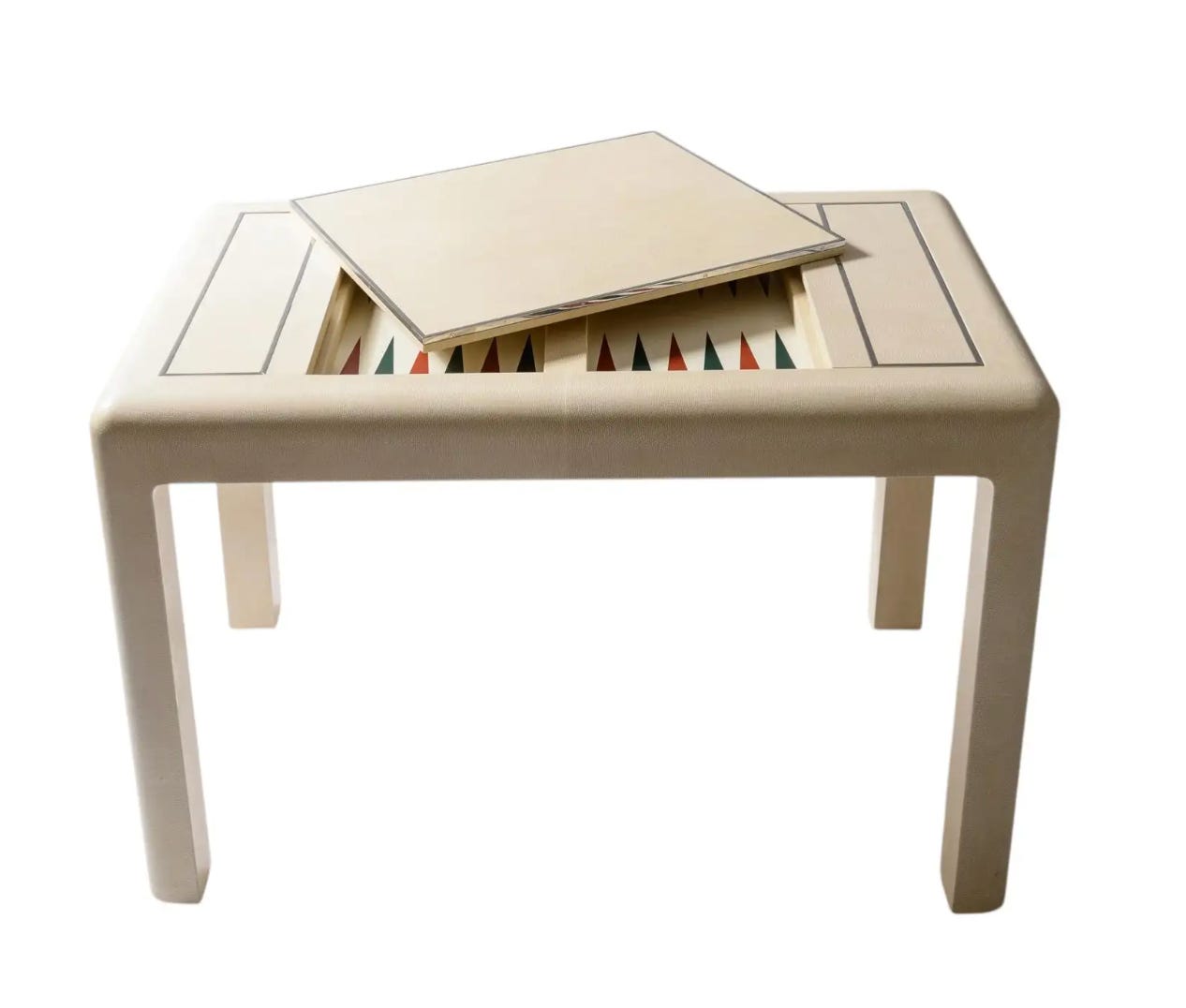
A Karl Springer backgammon table for $11,500 on 1stDibs
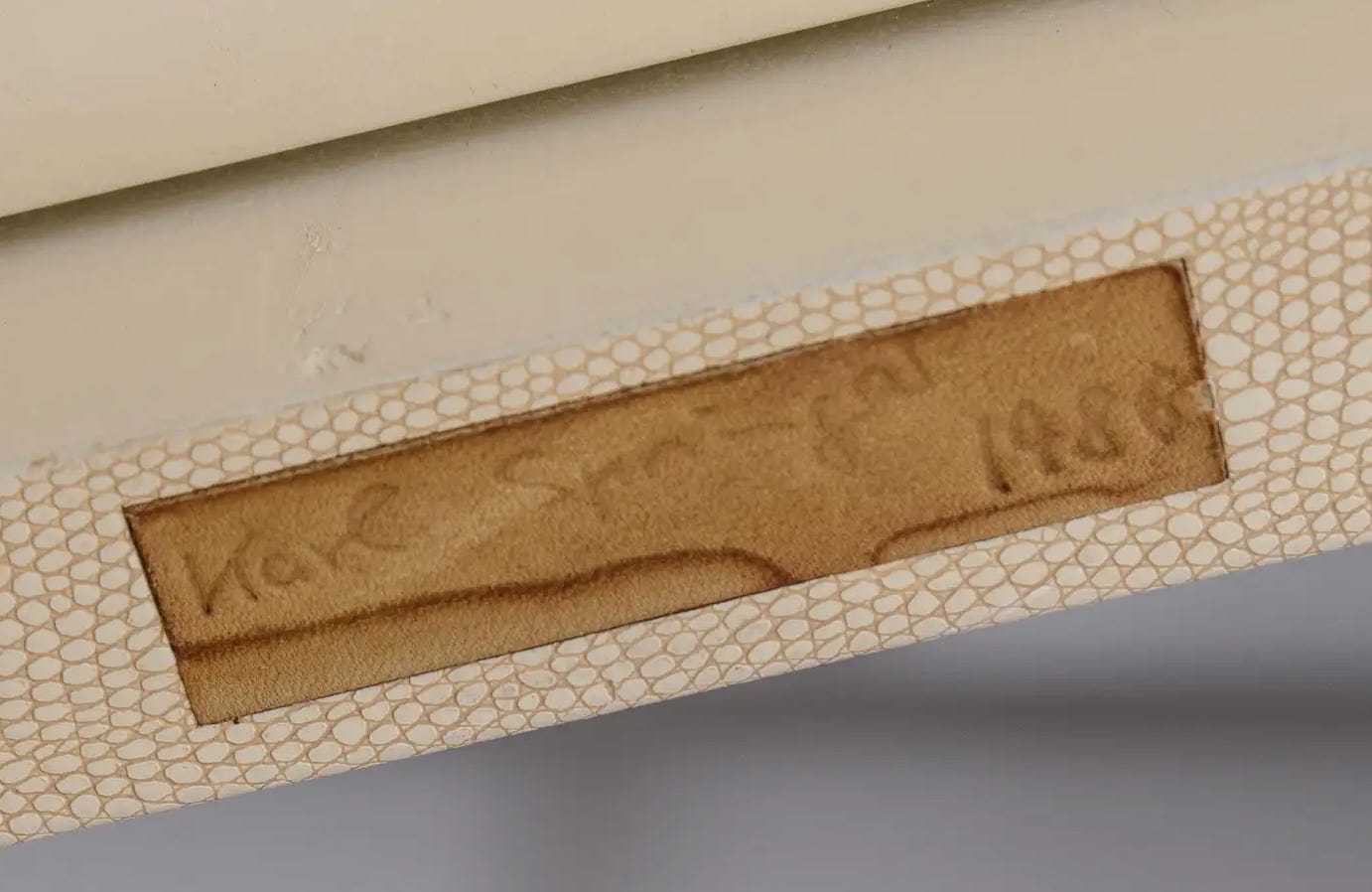
What to look for: Lacquer, goatskin, shagreen, parchment, brass, chrome, and Lucite. Springer used incredibly luxe materials on relatively simple shapes, so a piece may look minimal from across the room but feel much more unique and substantial up close. Many Springer pieces were originally marked with a label, but those labels are often long gone and lost to time. Look closely at the finish, construction, and underside—but remember that materials alone aren’t enough to confirm an attribution.
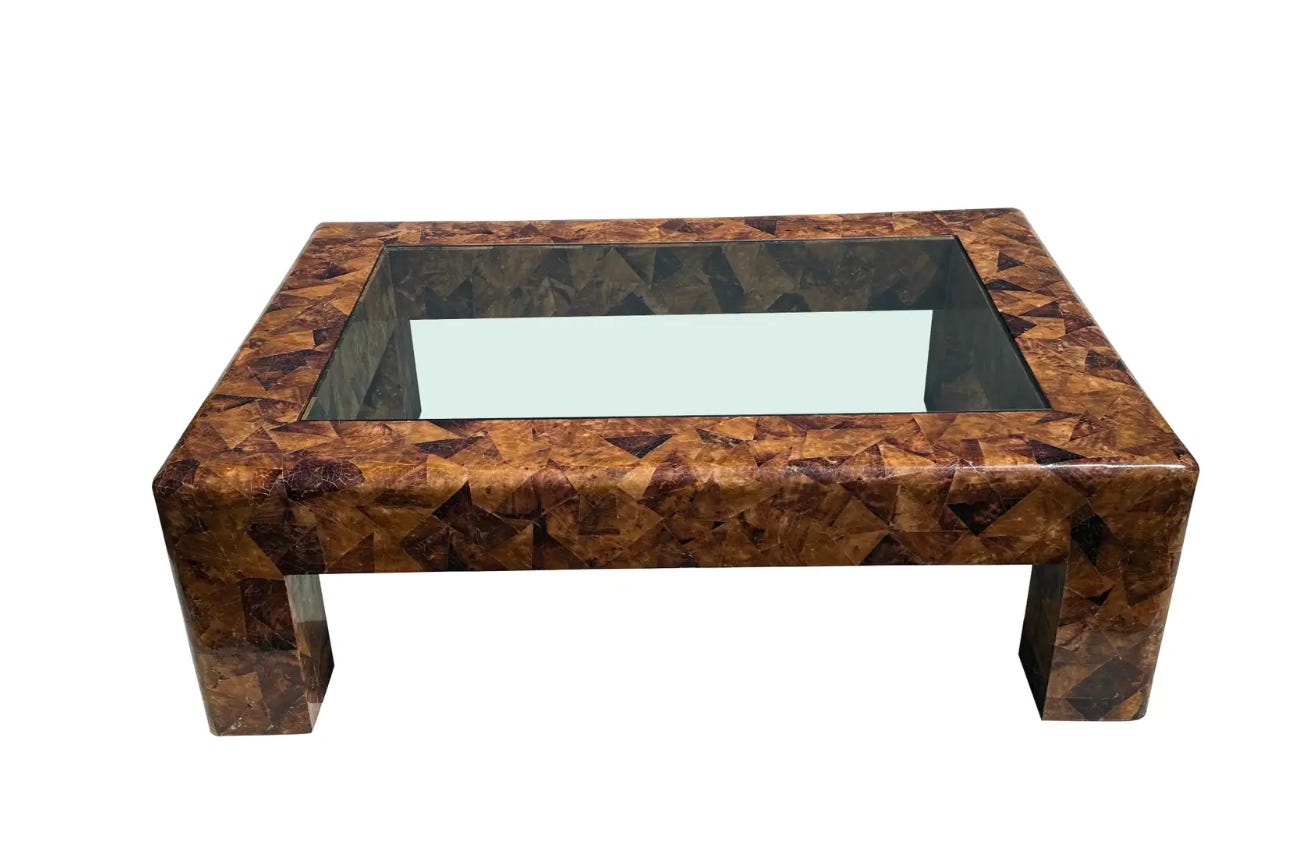
a signed Springer penshell table, $12,500 on 1stDibs
Where to find it: Estate sales, especially in homes decorated in the 1970s and 1980s and largely untouched since.
Worth knowing: Springer case pieces, tables, and consoles regularly resell well into the four figures, with rarer examples going much higher.
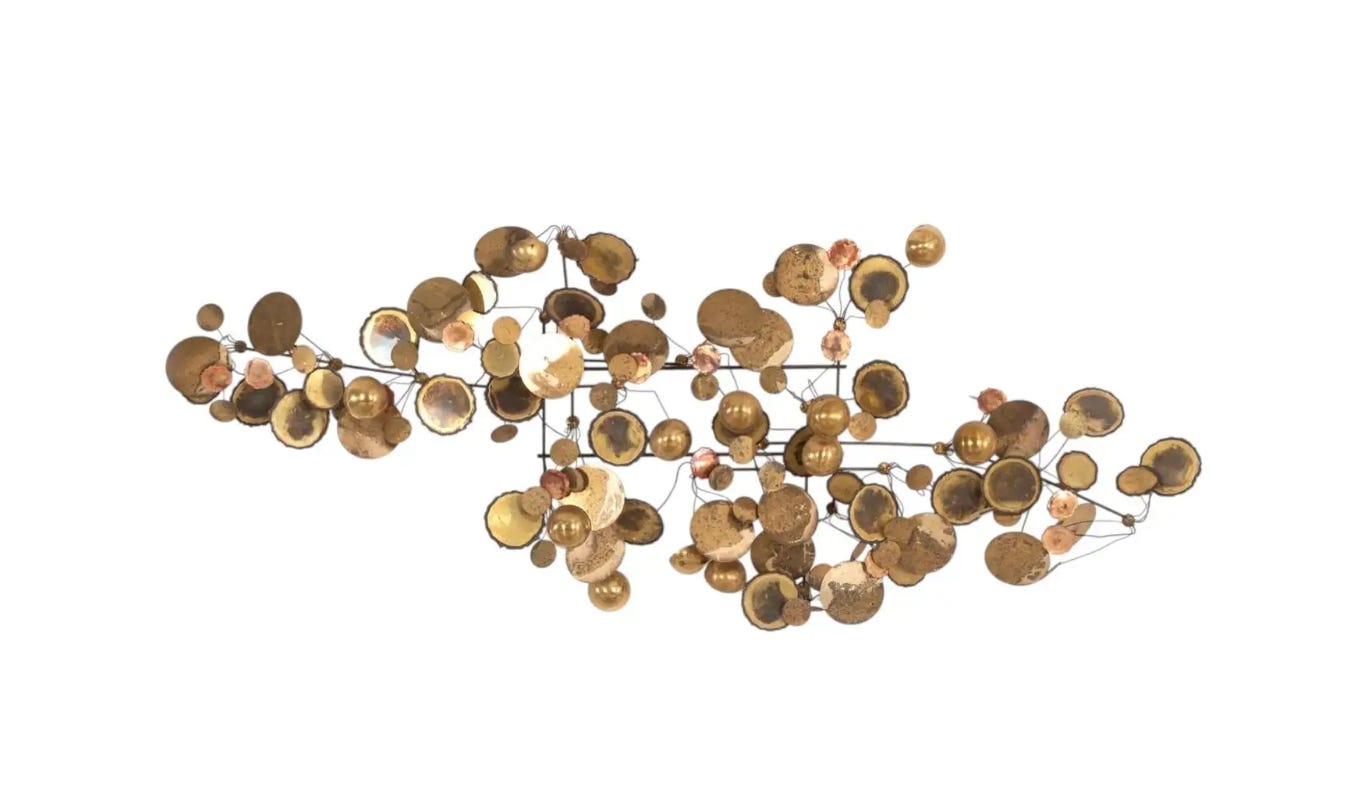
a 1965 Jeré sculpture, listed at $6,400 on 1stDibs
C. Jeré (Curtis Jeré)
What to look for: Sculptural metal wall art made from brass, copper, bronze, chrome, or steel. Many pieces are signed “C. Jeré” and dated somewhere near the edge, so check every corner (and the back!) before you leave something behind.
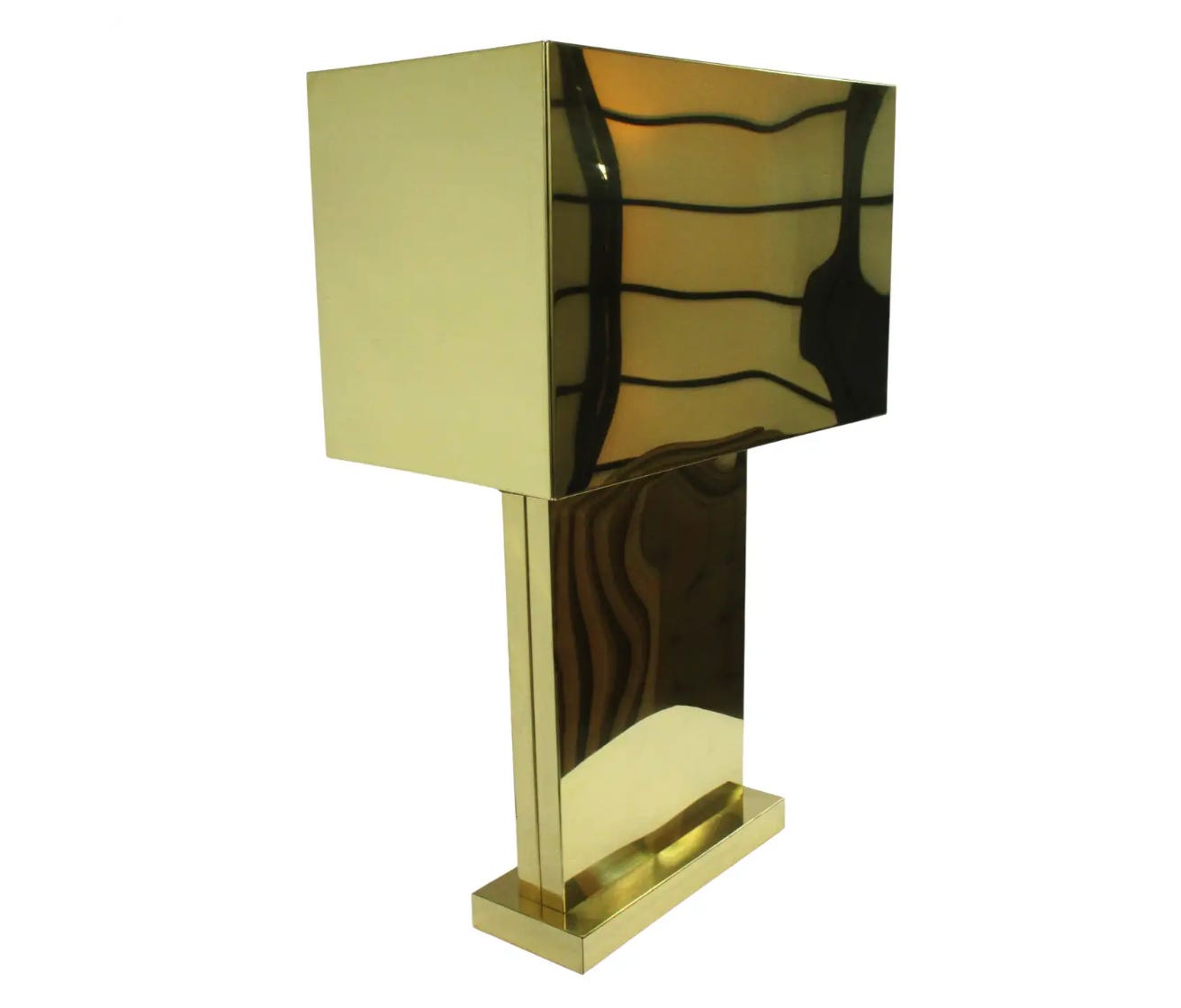
A Jeré lamp listed for $1,775 on 1stDibs
Where to find it: Thrift stores and estate sales alike. Wall art is often underpriced when it’s large, “weird,” or difficult to display (and Jeré is sometimes all of the above).
Worth knowing: The biggest and most sculptural pieces tend to be worth the most, but subject matter matters, too. Birds, sunbursts, raindrops, and abstract forms are all worth a second look. Also: pricing varies wildly on Jeré. Not every single signed Jeré piece is going to be worth a fortune. There is a lot of it out there. Look for the rare stuff.
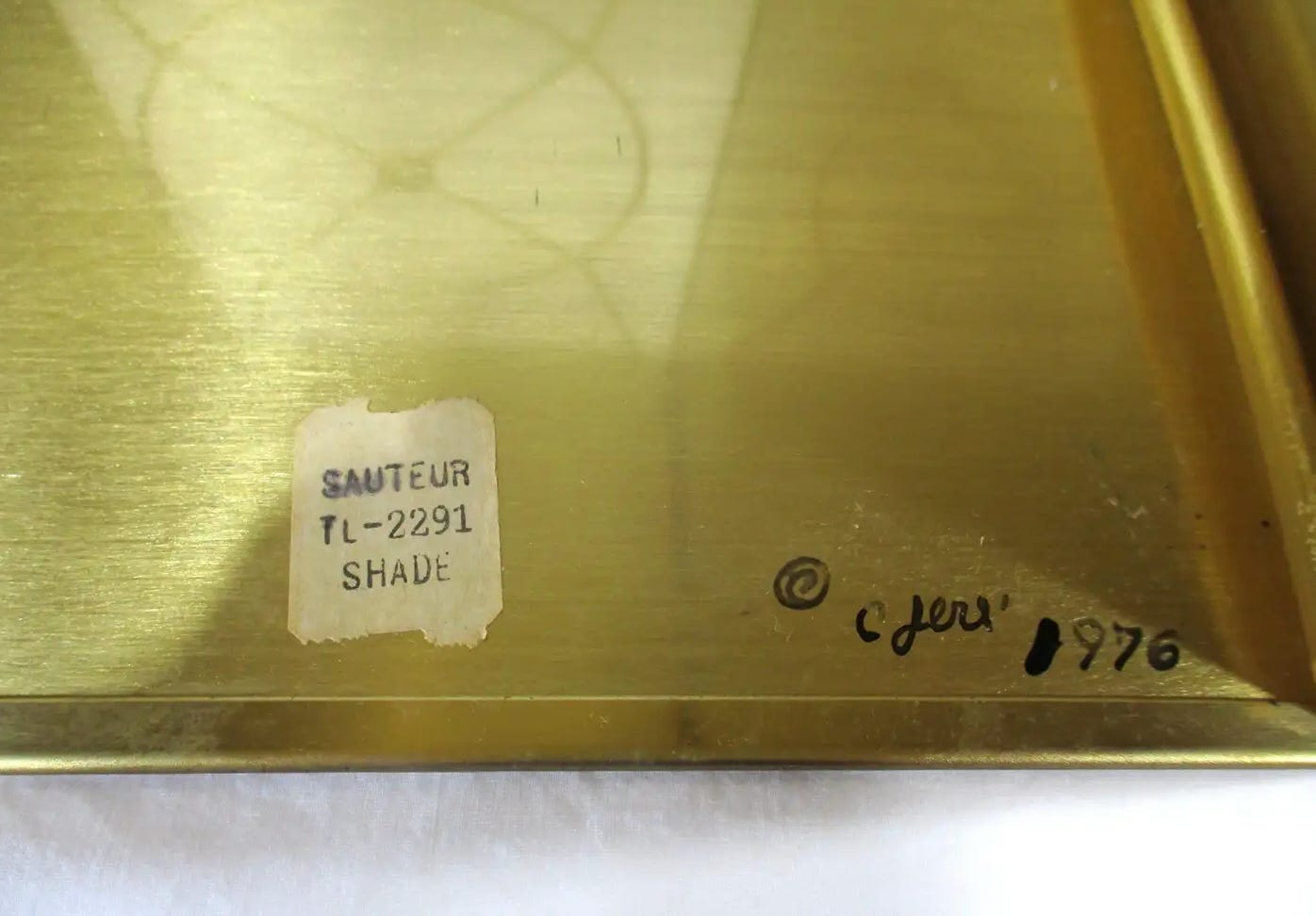
Below, I’m sharing some more names worth memorizing—including several whose work can sell for 10–20 times its thrift-store price.
